
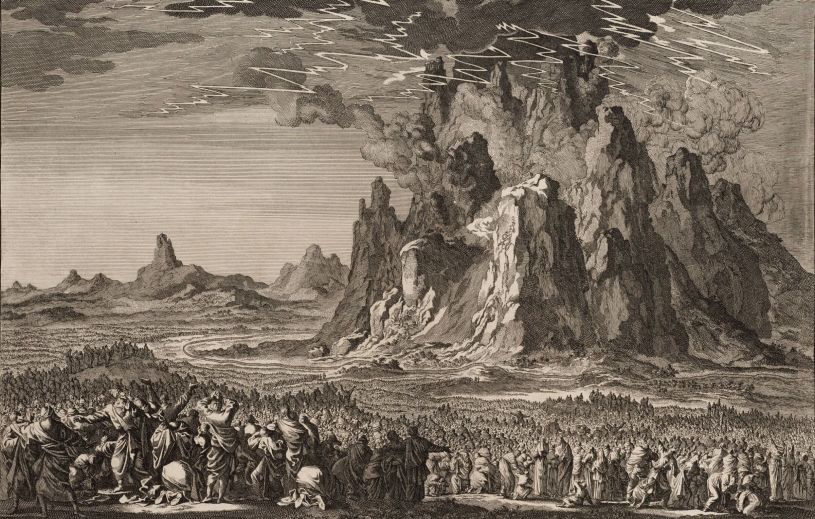
One of the most iconic and theologically rich places mentioned in the bible is Mt. Sinai. Also referred to as Mt. Horeb- the mountain of God, is where Moses met YHWH at the burning bush (Ex 3:1). Here Moses was commissioned to liberate the children of Israel and bring them back to “serve God on this mountain.” (v12) It was at this mountain “that LORD descended upon it with fire” and “Sinai was completely in smoke” (19:18). It was here that the 10 commandments and the Law were given to Israel. At the base of the mountain the Children of Israel encamped for almost a year (Num 10:11). Here they organized the Levites (Lev 1-27). Built the ark of the covenant and furniture for the sanctuary (Ex 25). The Tabernacle was constructed (Ex 35-40). The infamous Golden Calf was created and destroyed (Ex 32). Part way up the Mountain, Moses, Aaron, Dadab, Abihu and seventy elders of Israel saw God and dined with him(Ex 24:9).
Just adjacent to Mt. Sinai but at Horeb in Rephidim was where Moses struck the rock and it gave water to all of Israel (Ex17:6). Shortly thereafter, in the same valley is where the Amalekites attempted to ambush the Israelites but were defeated. It was here that Jethro, reunited Moses with his wife and children and gave him advice on how to judge Israel (Ex18).
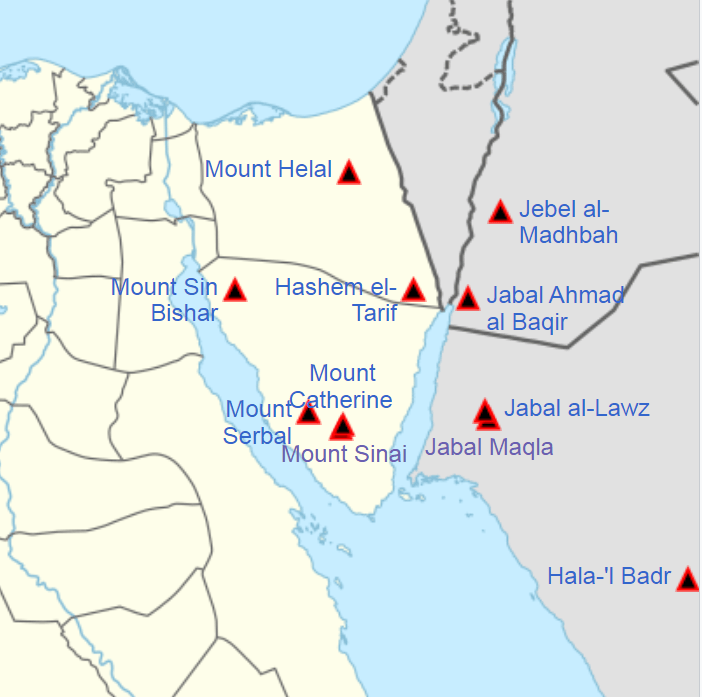
Considering all of the events that took place at this location it is discouraging that there is no consensus amongst scholars as to where the Mountain is with over 10 proposed locations. Also considering that there were between 2 to 3 million Israelites that had lived there for almost a year and all the events that took place, we would assume there would be some archeological evidence of their time there. However, to this date most all archaeologists and biblical scholars have concluded that this lack of compelling evidence is due to the fact that the Exodus account is mythological. Bart D Ehrman, professor of Religious Studies at University of North Carolina states:
“The exodus tradition was hugely important, as it became a kind of ‘founding legend’ for the nation of Israel. It does not appear to be actual history.”
Donald B. Redford professor at Pennsylvania State University states:
“The narrative of the Exodus is best understood as a myth that served to unify a disparate group of tribes into a single nation.” (Egypt, Canaan, and Israel in Ancient Times).
Even though there appears to be a consensus amongst biblical scholars and professors that the Exodus account is mythological or unproven at best, there is overwhelming evidence that they are being intentionally deceptive. There is an unquestionable amount of archeological, scriptural and geological evidence that tells us exactly where Mount Sinai is: Jabal Maqla in the Jabal al Lawz mountains in Arabia.
As we present the evidence, the question that we should be asking ourselves is not where the actual Mount Sinai is, but whether or not this information has been suppressed because of gross incompetence or willful intent.
Lets begin with the scriptural clues to where Mt. Sinai is located. As we know from Exodus 2:15 and Act 7:29 that Moses fled from the Pharoah and dwelt in the land of Midian.
It was here that Moses later married a daughter of Jethro (aka Reuel) the priest of Midian(v21) and tended his flocks. It was here in west Midian that Moses, when shepherding his flocks, took them to Horeb (Sinai), the mountain of God (Ex 3:1) where the LORD appeared to him in a burning bush. It is clear from scripture that Mount Sinai is in the land of Midian. There is scarcely any map or historian that places the land of the Midianites anywhere but east of the gulf of Aqaba in Arabia.

Also it is very easy to deduce that if the children of Israel “went out of the land of Egypt”(Ex3:18), and Moses was escaping from the Egyptian pharaoh(Ex 2:15), Mount Sinai would logically NOT be in Egypt. Exodus 4:19 reinforces this when the LORD said to Moses “Go back to Egypt for all those who wanted to kill you are dead” meaning Moses was not currently in Egypt. As most historians agree, the Egyptians during the 16th to the 14th centuries BC controlled Canaan and the “Sinai” peninsula but did not control Arabia including the territory of Midian. This would indicate that Midian and Mount Sinai would be in Arabia and not in Egypt as indicated in Galatians 4:25:
“for this Hagar is Mount Sinai in Arabia”
Another major indicator of where Mt. Sinai would be is given in Deuteronomy 1:2 where Moses states:
It is eleven days’ journey from Horeb (Mt Sinai) by way of Mount Seir to Kadesh Barnea.
There are multiple scriptures that make it clear Mt. Seir is located in Edom (Gen_32:3, Gen_36:8&9, Gen_36:21, Num_24:18 ect,ect….). The Seir mountain range extends from the Gulf of Aqaba all the way up to the Dead Sea. If you consider the distance a large group of people like the Israelites could travel over moderate terrain in one day, 12 miles would be pretty reasonable. In eleven days you could cover about 130 miles. A 130 miles south of Petra (modern Kadesh Barnea) along the Seir mountain range puts you smack dab in the center of the Midianite territory- easily in reach of Jabal Maqla (Mount Sinai).
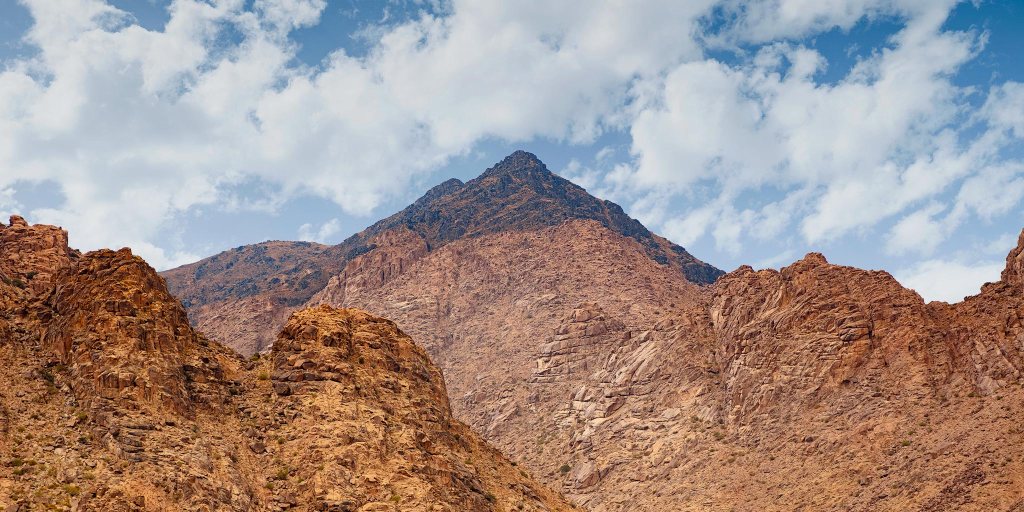
And as we look closer at the archeological and geological evidence of Jabal Maqla as Mount Sinai, the case becomes even more compelling. Jabal Maqla means “burnt mountain” in Arabic. And the mountain is just that – burnt on the top. Multiple atheistic sources have tried to explain that the reason the mountain is black on the top and lighter colored below is because darker and lighter volcanic rock settled to the top while the heavier tan granite stayed on the bottom. Multiple photos show that this explanation isn’t just a lie, its a very weak lie.
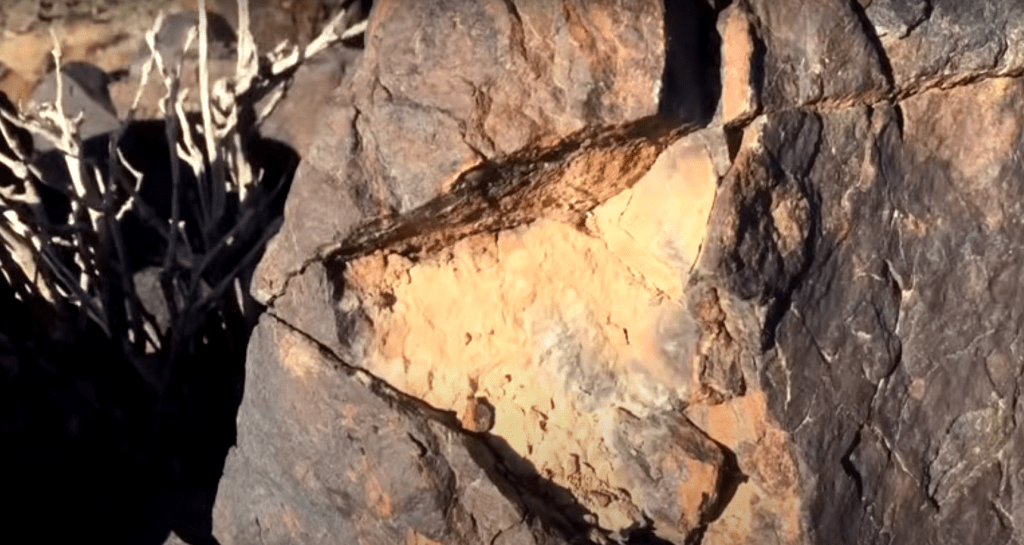
When the supposed black “volcanic” rocks are exposed underneath they look identical to the tan granite below. There is a layer of baked on carbon that covers any exposed rocks the top of the mountain. Remember that when the glory of the LORD descended on the mountain it was completely on fire:
Exo 24:17 The sight of the glory of the LORD was like a consuming fire on the top of the mountain in the eyes of the children of Israel.
Exo 19:18 Now Mount Sinai was completely in smoke, because the LORD descended upon it in fire. Its smoke ascended like the smoke of a furnace, and the whole mountain quaked greatly.
Notice what geologist Dr. Charles Whittakes states about the blackened peak on Mount Maqula:
“It is absolutely granite, of the exact same variety of the entire rest of the mountains in the area. It appears reddish-pinkish-brown on all the surrounding mountains. The difference in this peak’s dispersion of this rock is that it has been darkened. By what, I don’t know.“
With the smoke of a furnace coming from Sinai for weeks, we would expect to see the carbon deposits that are currently there. Jabal Maqla, “burnt mountain” got its name for a reason.
A series of important events that also took place near Mt. Sinai is described in chapter 17 of Exodus where the LORD provided water for the children of Israel in the Wilderness of Sin. Here they camped at Rephidim which we learn is at the base of Horeb or Mt. Sinai(Ex 17:6). At this site Moses was instructed to smite a prominent boulder with his staff and water was to come out of it. Multiple scriptures indicate this rock was split in two in the process (Ps78:15; Is48:21).
“He opened the rock, and water gushed out; it flowed through the desert like a river.”
Ps 105:41
Due to the fact that the children of Israel stayed at Mt. Sinai for almost a year, and this would be their only water source in the area, we could reasonably believe that water flowed from this rock for a considerable period of time. It was also at this location at Rephidim that we learn that the Amalekites attacked the Israelites and were defeated by Joshua(v13). Right after this victory Moses built an altar to commemorate this event.
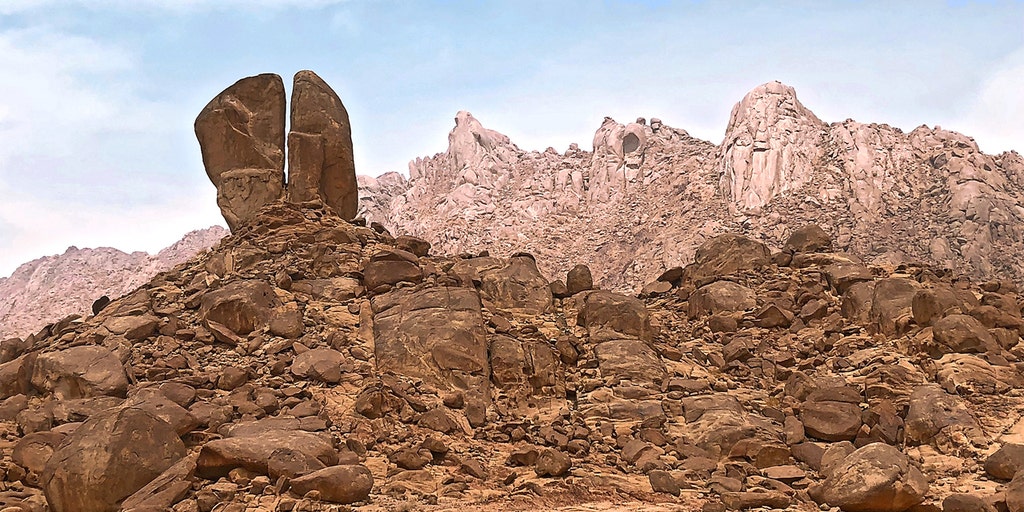
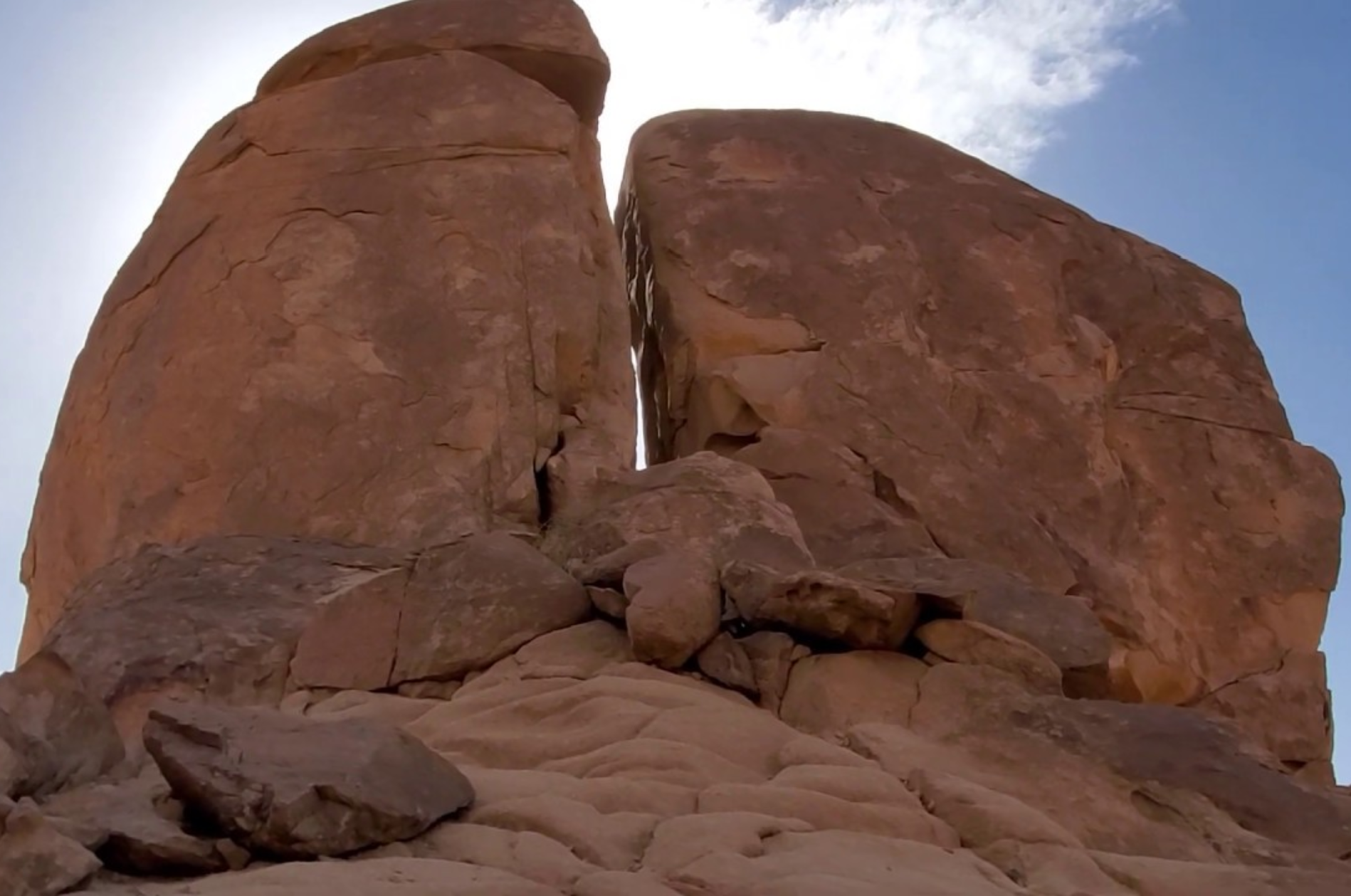
And we find a significant amount of evidence just North west of Jabal Maqla to confirm all of it. Here we find a prominent bolder split in half on the west side of the base of the mountain as scripture indicates. The Split Rock and other surrounding rocks in the area are very jagged and show very little signs of wind or water erosion- which is common for desert areas. However, right at the base of The Split Rock (and only here) we see signs of significant water erosion (fluvial abrasion) where the stones are smooth and rounded – as his photo shows.
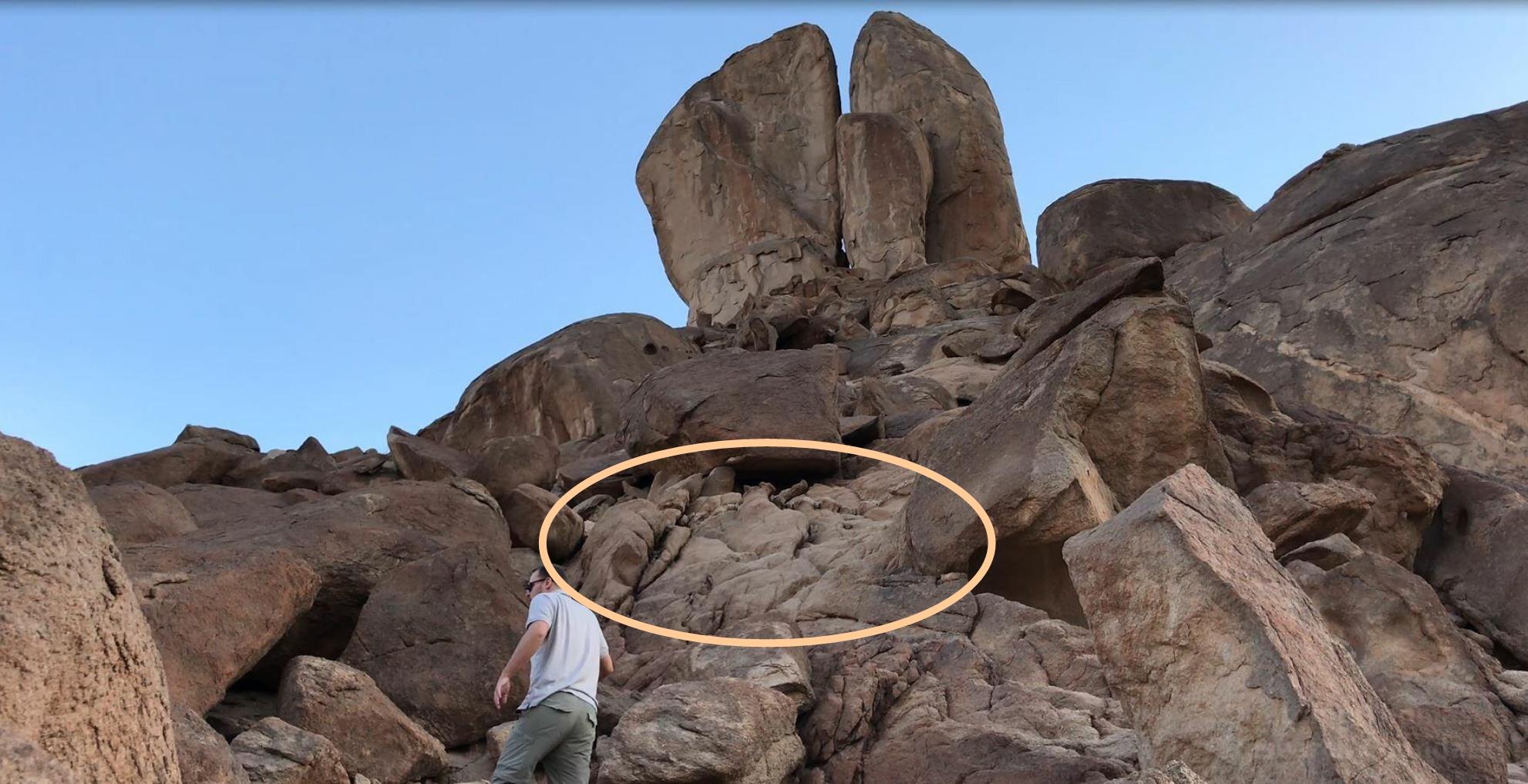
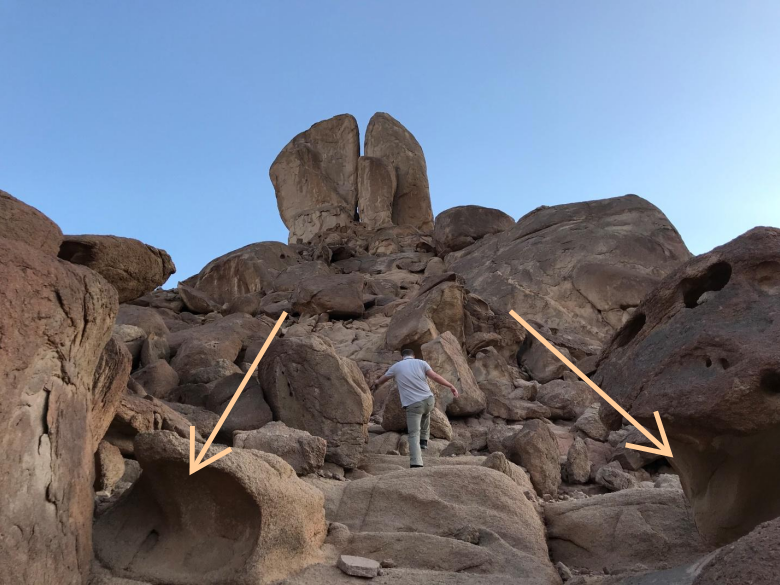
The massive and consistent flow of water even cut through several of the boulders leaving them hollowed out. What natural phenomenon could explain how you would have this much water erosion at the peak of a hill? As you can see this erosion can be found on both sides all the way down the hill.
We also know from Ex 17:15 that right after the defeat of the Amalakites in Rephadim, Moses built an altar to commemorate their victory and called it: Yehôvâh nissı̂y or “The Lord is my banner”. The remains of this altar has been found right where we expect it to be- in the same valley as the split rock.

Another very compelling piece of evidence is the numerous proto-hebreic inscrptions found through out the area.
The Hebrew word “Rephidim” according to Brown-Drivers-Brigs dictionary means “place of rest”. In this valley several proto-Hebrew inscriptions have been found in this valley with the letters Nun and cHet which is interpreted as nûach meaning “rest”. Also found in this valley are several inscriptions referring to people with Hebrew names who had died.
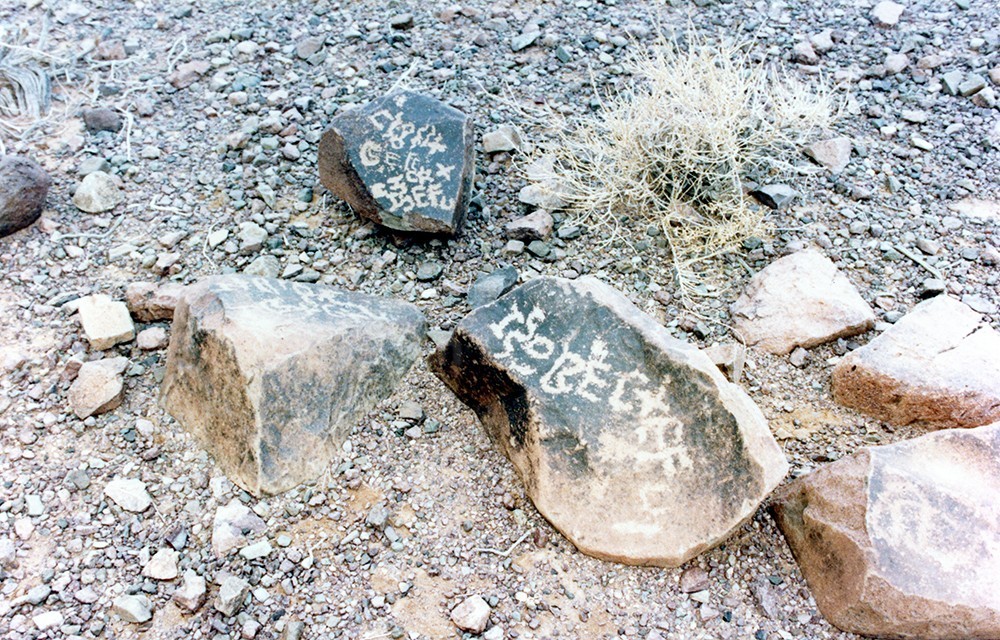
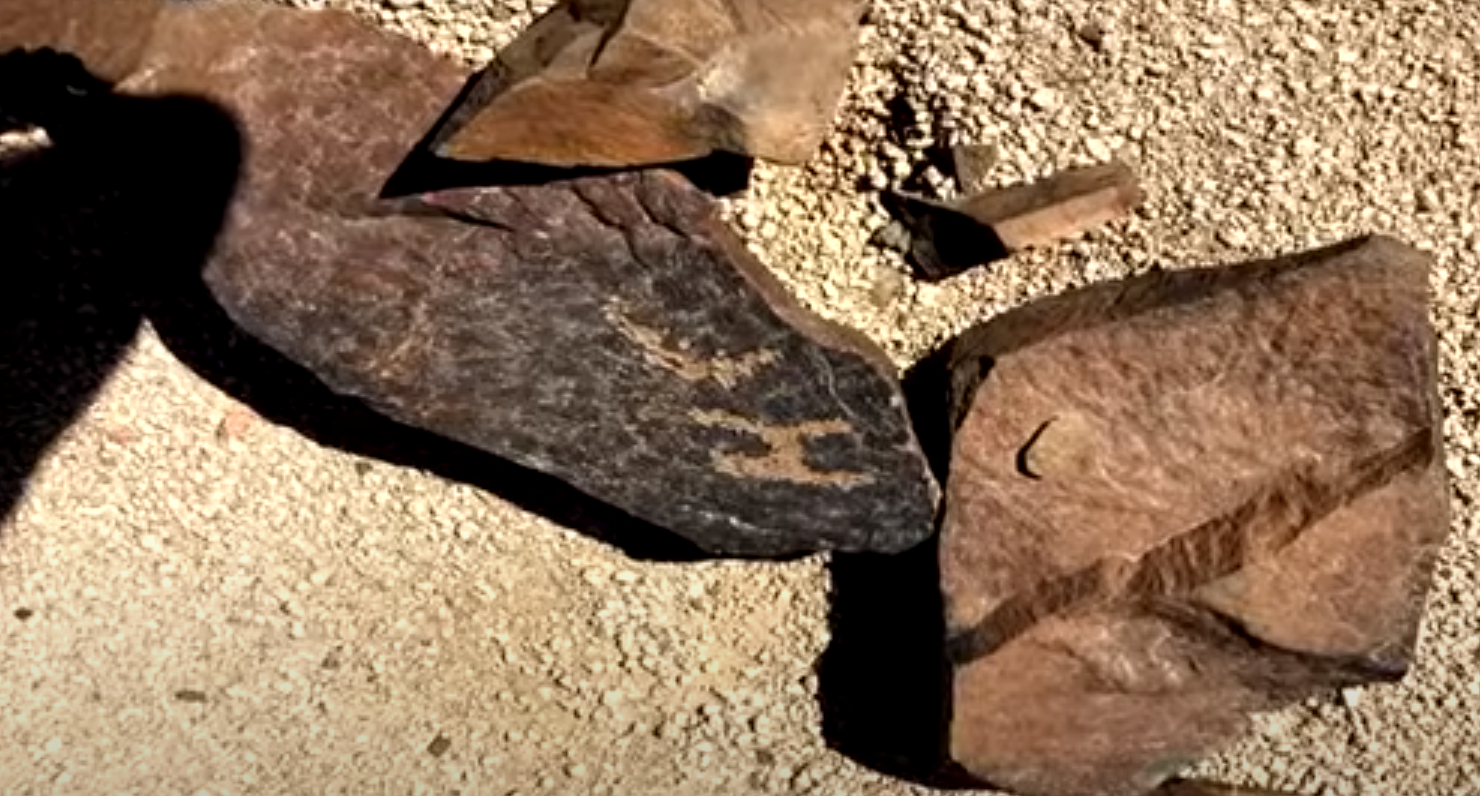
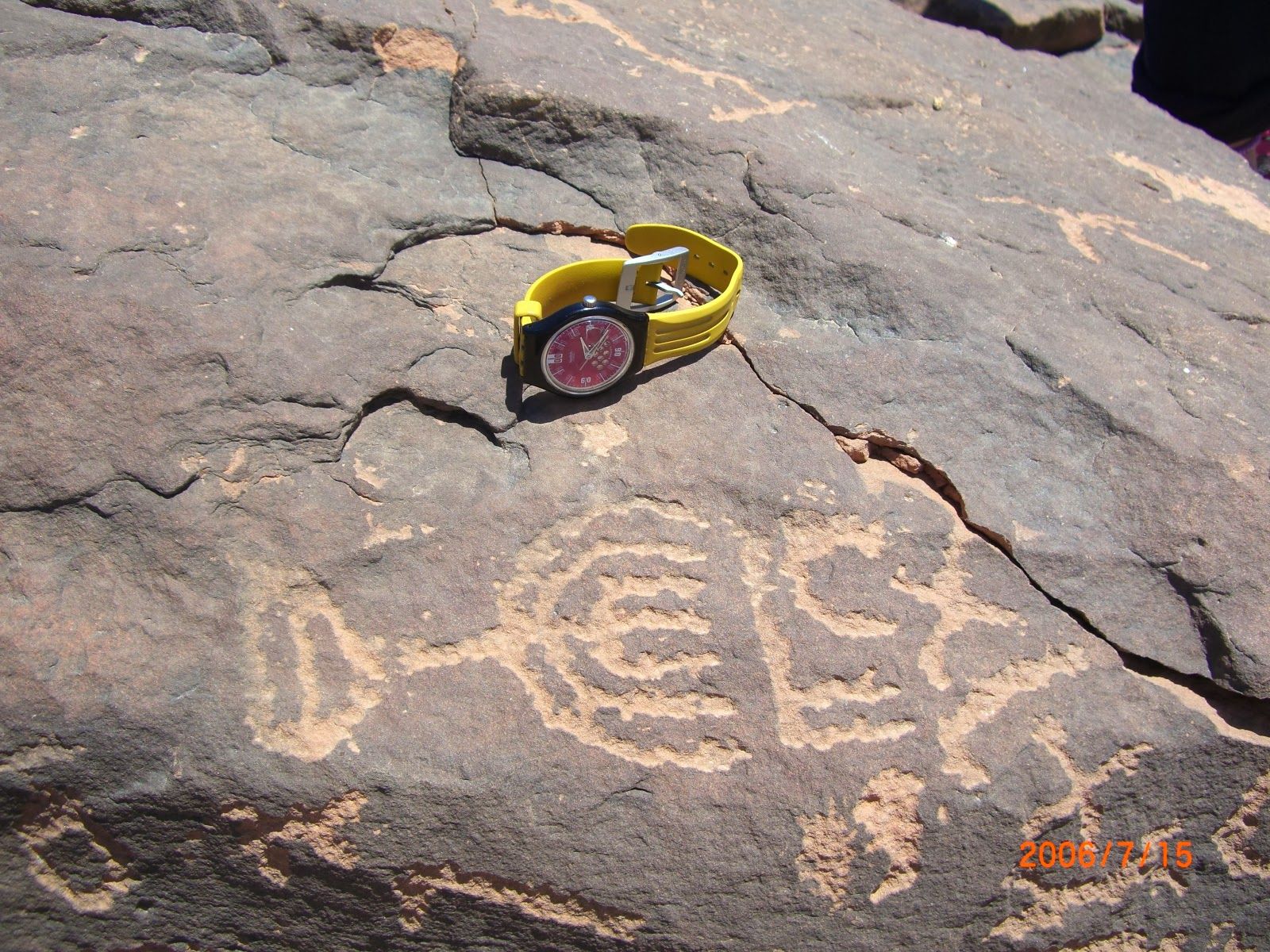
From scripture (Exodus 25), we know that the instructions to build the Ark of the Covenant, the table of showbread, and the menorah candle were first given at Mt. Sinai. An inscription of a menorah candle has been found at Jabal Maqla surrounded by many other Proto-Hebraic inscrptions.
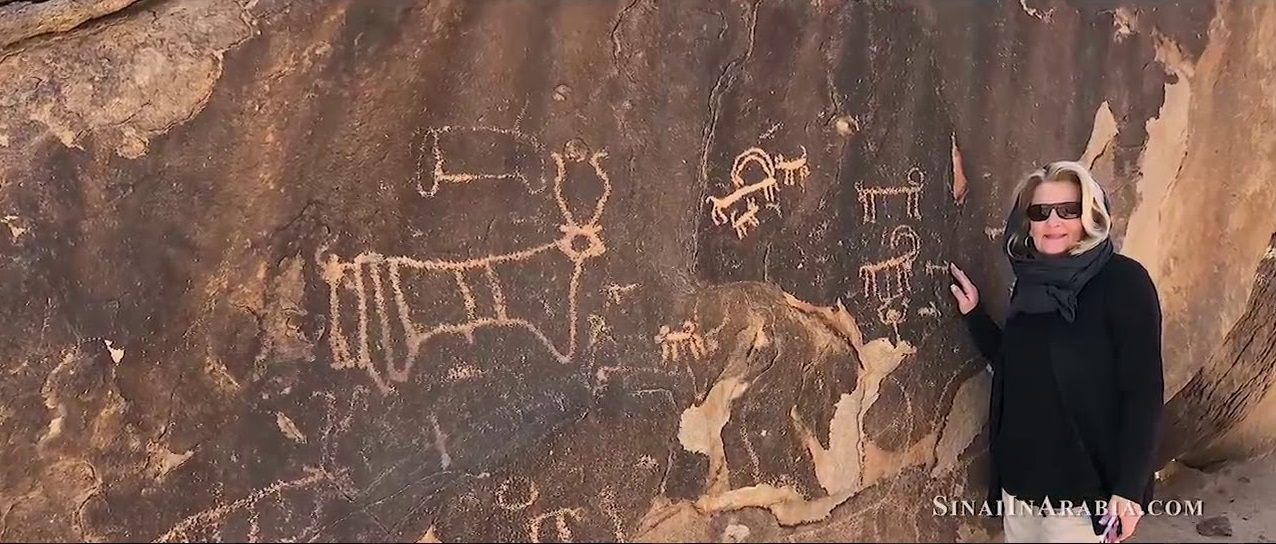
And at another location at the base of Jabal Maqla there are numerous inscriptions of cows surrounding an altar which could easily be the site of the golden calf.

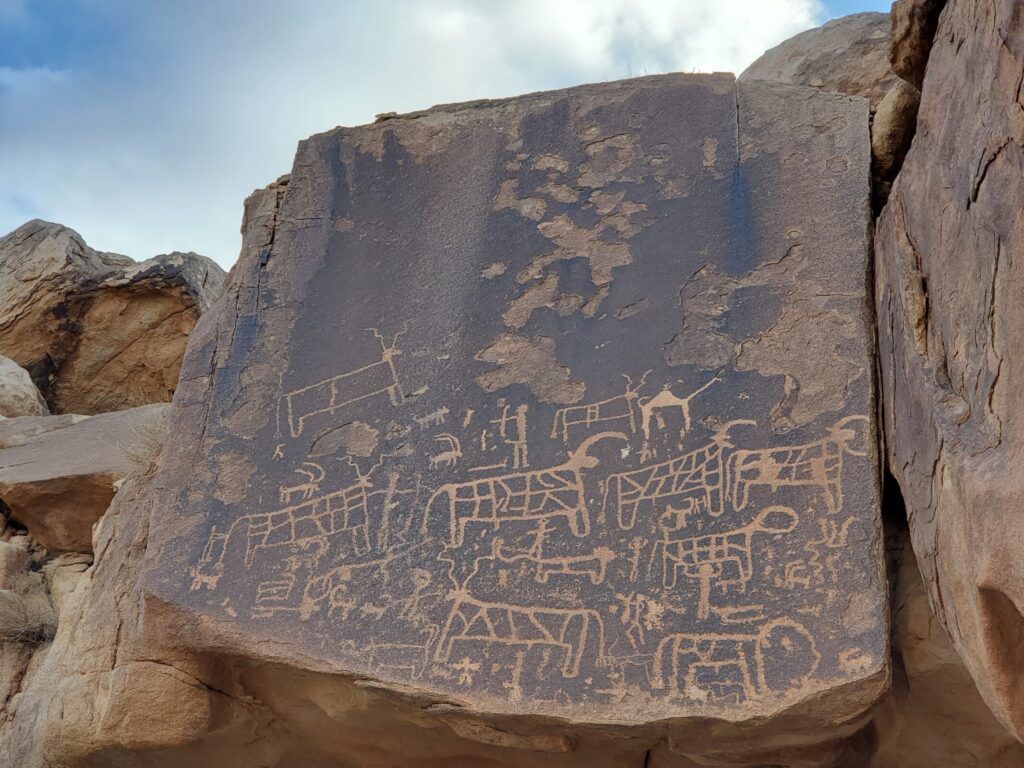
How could all of this evidence be overlooked?
It has been said “You can only attribute so much to incompetence until you have to assume intent”. We would have to immensely naive or in complete denial to believe all of this evidence has been “accidently overlooked” by academia because of incompetence. This evidence has been willfully suppressed.
The Saudi government over the years has approved upwards to a thousand archeological dig requests in Arabia with 40 approved in 2018 and 44 in 2019. To this date there has not been a single excavation anywhere on or around Jabal Maqula- Mount Sinai. None of our Universities are interested in research that might confirm the Bible– only in trying to dismiss it.
Many of us rely on our institutions of higher education to uncover the truth, to decipher the past, and to objectively explain to us our history. Instead, it has become painfully clear these institutions are infested with atheists who relentlessly work to suppress any evidence of our creator without moral boundaries. These men of unrighteousness, whose mission has been to discredit the bible and hide sites like Mt. Sinai, need to be exposed.
Indeed, the wrath of God is revealed from heaven upon all ungodliness and unrighteousness of men who suppress the truth in unrighteousness;
Rom 1:18 AFV
 The Herald of Truth