
Throughout Scripture there is a recurring promise God gives to His people: help in our time of need. When the righteous cry out to Him, He hears their prayers.
Psalm 34:17 reminds us:
“When the righteous cry for help, the LORD hears and delivers them out of all their troubles.”
These promises give believers strength and courage during trials. They remind us that we are not alone and that God stands beside those who trust Him.
Psalm 109:31 declares:
“For he stands at the right hand of the needy one, to save him from those who condemn his soul to death.”
Likewise, the Apostle Paul reassures believers that God’s faithfulness sets limits on what we endure:
“God is faithful, and he will not let you be tempted beyond your ability, but with the temptation he will also provide the way of escape, that you may be able to endure it.” (1 Corinthians 10:13)
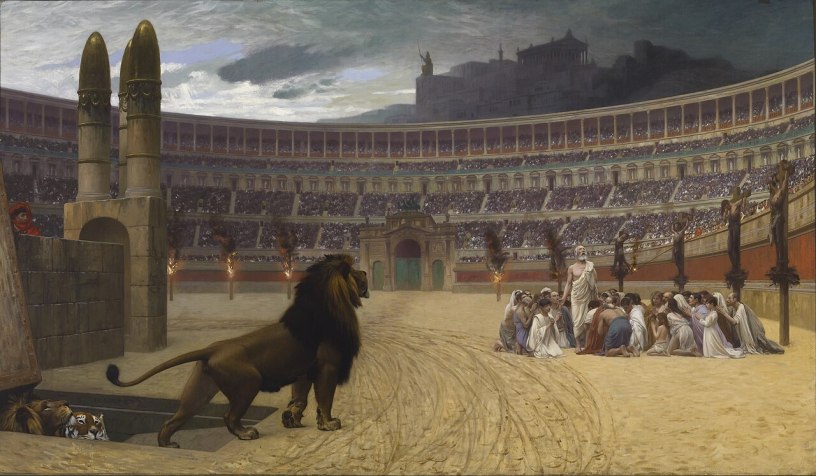
These passages offer tremendous comfort. They tell us that God sees, hears, and intervenes in the lives of His people. Yet Scripture also contains another reality that Christians often prefer not to discuss: the faithful are not always spared from suffering, persecution, or even death.
In fact, many of God’s most faithful servants throughout history suffered terribly for their obedience. This tension between divine protection and martyrdom raises an important question.
Does God always protect His saints? Or will some of the faithful suffer persecution—even to the point of death? This question becomes especially important when we examine the prophecies concerning the time of the end.
The Reality of Martyrdom in Scripture
Scripture openly acknowledges that many righteous people have suffered and died for their faith. Jesus Himself rebuked the religious leaders of His day by reminding them of the long history of persecuting God’s servants:
“Therefore I send you prophets and wise men and scribes, some of whom you will kill and crucify.” (Matthew 23:34)
The eleventh chapter of Hebrews gives one of the most sobering descriptions of the cost of faithfulness. After describing many heroes of faith, the writer continues:
“Others suffered mocking and flogging, and even chains and imprisonment. They were stoned, they were sawn in two, they were killed with the sword… wandering about in deserts and mountains, and in dens and caves of the earth.” (Hebrews 11:36–38)
These believers were not weak in faith. They were not abandoned by God. Instead, they were men and women whose lives demonstrated unwavering devotion.
The passage concludes with a remarkable statement:
“Of whom the world was not worthy.”
This biblical record reminds us that faithfulness does not always guarantee physical protection in this life.
Sometimes the victory of faith is endurance rather than escape.
The Prophetic Warning: War Against the Saints
When we turn to the prophecies of the end time, we see a striking and sobering theme repeated across multiple passages: there will be persecution against God’s people.
Daniel prophesied that a powerful ruler would wage war against the faithful:
“As I looked, this horn made war with the saints and prevailed over them, until the Ancient of Days came.” (Daniel 7:21–22)
Later in the same prophetic vision, Daniel was told that the persecution would last until the power of God’s people was shattered:
“When the shattering of the power of the holy people comes to an end all these things would be finished.” (Daniel 12:7)
The book of Revelation echoes this same prophecy. Speaking of the Beast power that rises during the final period before Christ’s return, Scripture says:
“Also it was allowed to make war on the saints and to conquer them.” (Revelation 13:7)
Even Jesus warned His disciples that such persecution would come at the end time.
“Then they will deliver you up to tribulation and put you to death, and you will be hated by all nations for my name’s sake.” (Matthew 24:9)
These passages make one fact unmistakably clear. The saints will face persecution in the last days. But Scripture also reveals another dimension of this prophecy: not all of God’s people will suffer the same fate.
Some will escape. Others will be martyred.
The Fifth Seal: Martyrs Awaiting Justice
One of the most revealing passages regarding end-time martyrdom appears in the opening of the Fifth Seal in Revelation. John writes:
“When he opened the fifth seal, I saw under the altar the souls of those who had been slain for the word of God and for the witness they had borne.” (Revelation 6:9)
These faithful believers cry out:
“O Sovereign Lord, holy and true, how long before you will judge and avenge our blood on those who dwell on the earth?” (Revelation 6:10)
They are told to wait a little longer—until the full number of martyrs is completed.
This passage confirms that martyrdom is not merely a historical phenomenon. It will continue until the final events of this age. As difficult as that truth may be, Scripture speaks plainly about it. The suffering of the saints is part of the prophetic timeline leading to Christ’s return.
But Revelation also shows another group of believers who are protected during this same period.
The Woman in the Wilderness
Revelation 12 describes a dramatic sequence of events in which Satan persecutes the people of God.
After being cast down to the earth, the dragon turns his attention to the woman who symbolizes God’s faithful people.
“But the woman was given the two wings of the great eagle so that she might fly from the serpent into the wilderness… where she is to be nourished for a time, and times, and half a time.” (Revelation 12:14)
This passage clearly indicates divine protection for a portion of God’s people during the tribulation period. However, the chapter immediately adds another crucial detail.
“Then the dragon became furious with the woman and went off to make war on the rest of her offspring.” (Revelation 12:17)
This second group is described as those:
“who keep the commandments of God and hold to the testimony of Jesus.”
In other words, they are believers. Yet they are not the same group that fled into the wilderness. Here we see a sobering truth emerge: some saints are protected while others face persecution.
This naturally leads to an important question: What determines who escapes and who does not?
The Warning to the Churches
Revelation chapters 2 and 3 contain letters to seven churches. Scholars have debated whether these churches represent historical congregations, prophetic eras of the Church, or spiritual conditions among believers.
Regardless of the interpretation, one theme appears repeatedly throughout these messages: the command to remain watchful and spiritually prepared.
Christ warns:
“Therefore, remember what you have received and heard, and hold on to this, and repent. Now then, if you will not watch, I will come upon you as a thief, and you shall by no means know what hour I will come upon you.” (Revelation 3:3)
Yet one church receives a unique promise. To the church in Philadelphia, Christ says:
“Because you have kept my word about patient endurance, I will keep you from the hour of trial that is coming on the whole world.” (Revelation 3:10)
Both churches belong to Christ. Both are part of His body. Yet only one receives the promise of protection.
This difference parallels the parable of the ten virgins in Matthew 25. All ten were waiting for the bridegroom. Yet only five were prepared when the moment arrived. The others were not ready.
Four Biblical Instructions for Escape
If Scripture shows that some believers will escape while others will not, then the obvious question becomes: what does God expect from His people?
The Bible provides several clear instructions.
1. We Must Watch
One of the most repeated commands in Jesus’ end-time teaching is the instruction to watch. In the Olivet Prophecy, Jesus repeatedly emphasizes vigilance:
“Therefore, stay awake, for you do not know on what day your Lord is coming.” (Matthew 24:42)
He continues:
“Therefore, you also be ready. For the Son of man is coming at a time that you do not think.” (Matthew 24:44)
The command appears again in Mark’s account:
“Take heed, be watching and praying. For you do not know when the time is coming.” (Mark 13:33)
And Luke adds an important detail:
“Watch therefore, and pray at all times that you may be accounted worthy to escape all these things that shall come to pass, and to stand before the Son of man.” (Luke 21:36)
Watching involves spiritual awareness. It means paying attention to the prophetic warnings God has given rather than ignoring them.
Sadly, in recent years many ministers have downplayed the importance of prophecy, treating it as a curiosity rather than a vital warning. But Scripture treats prophecy very differently. It treats prophecy as advance instruction from God.
2. We Must Study Prophecy
Many Christians view prophecy as something optional—interesting but not essential. Yet the Bible repeatedly urges believers to understand the prophetic message. Peter wrote:
“We also possess the confirmed prophetic Word to which you do well to pay attention, as to a light shining in a dark place,” (2 Peter 1:19)
Prophecy is not decorative theology. It is a lamp intended to guide believers through dark and confusing times.
When Jesus warned His disciples about the destruction of Jerusalem, He told them:
“When you see the abomination of desolation… then let those who are in Judea flee to the mountains.” (Matthew 24:15–16)
Notice the key phrase: “when you see.” Understanding prophecy enables believers to recognize when prophetic events are unfolding. Without that understanding, many will not realize what is happening until it is too late.
3. We Must Live in Obedience
Spiritual discernment does not come from curiosity alone. It grows out of a life of obedience. Proverbs teaches:
“For the LORD gives wisdom; from his mouth come knowledge and understanding. He stores up sound wisdom for the upright.” (Proverbs 2:6–7)
Daniel was told something similar regarding the end times:
“Many shall purify themselves and make themselves white and be refined, but the wicked shall act wickedly. And none of the wicked shall understand, but those who are wise shall understand.” (Daniel 12:10)
Understanding prophecy is not merely an intellectual exercise. It is a spiritual gift given to those who seek God sincerely. Those who walk in obedience develop the discernment needed to navigate difficult times. Those who ignore God’s commands often fail to recognize danger even when it stands directly in front of them.
4. The Saints Will Have to Flee
One of the most overlooked aspects of Jesus’ prophecy is the instruction to leave.
Christ warned His followers:
“Then let those who are in Judea flee to the mountains.” (Matthew 24:16)
He continued:
“Let the one who is on the housetop not go down to take what is in his house.” (Matthew 24:17)
The urgency of this command shows that divine protection does not always mean staying where we are. Sometimes protection requires action. When God warned Lot about the destruction of Sodom, the message was clear:
“Escape for your life. Do not look back.” (Genesis 19:17)
Similarly, when the early Christians saw Jerusalem surrounded by armies in AD 70, they fled the city in obedience to Christ’s warning. Those who recognized the sign escaped. Those who ignored it did not.
Faith in the Final Test
Scripture warns that the most dangerous moment before calamity often comes when everything appears peaceful. Jeremiah wrote of those who say, “Peace, peace,” when there is no peace (Jeremiah 6:14), and Paul warned, “While people are saying, ‘There is peace and security,’ then sudden destruction will come upon them” (1 Thessalonians 5:3).
History provides a powerful example. In 68–69 AD many believed Jerusalem would be the safest place as Rome advanced. People fled into the city believing its walls and the Temple would protect them. But Jesus had warned His followers decades earlier: “When you see Jerusalem surrounded by armies… let those who are in Judea flee to the mountains” (Luke 21:20–21).
The Christians who believed Christ’s words fled in faith while others sought safety in Jerusalem. When the Romans returned in 70 AD, the city was destroyed. Likewise at the end, the faithful will heed the prophetic signs and flee in faith before the persecution of the saints begins.
The book of Hebrews tells us that the just must live by faith. And the time of the end will be no different. It will take faith to leave everything and act upon the words of Christ that were written 2000 years ago.
 The Herald of Truth