
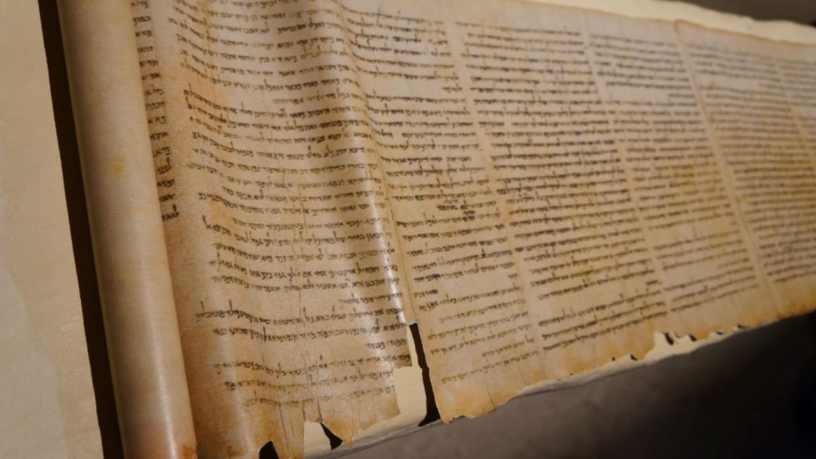
In 1876, Jewish historian Heinrich Graetz published his monumental work, The History of the Jews, an eleven-volume compilation drawn from the Mishnah, the Babylonian and Jerusalem Talmuds, and numerous historical sources. His work became foundational in Jewish historical studies and remains influential to this day.
Yet one section of his work sparked considerable controversy among theologians: the so-called Council of Jamnia.
Following the destruction of the Temple in A.D. 70 and the exile of the Jewish people, there was no longer a centralized religious authority. According to the Mishnah, Graetz records that in the 90s A.D., Yochanan ben Zakkai and his successor, Rabban Gamaliel II, established a council at Jamnia (Yavneh) as a continuation of the Sanhedrin. There, certain books—Esther, Song of Solomon, and Ecclesiastes—were examined and reluctantly affirmed.
To critical scholars, this suggested that the Old Testament canon was not firmly established until the late first century. This conclusion, however, has long been rejected by both Catholic and traditional Christian scholars.
Catholics for ages have wanted to take credit for the canon of scriptures pointing to the Council of Nicaea in A.D. 321. Meanwhile, traditional Christian understanding places the formation of the Old Testament canon much earlier—typically with Ezra in the 4th century B.C.
There is strong biblical support for this earlier view.
Jesus Christ Himself confirms the established tripartite division of Scripture formalized by Ezra:
“All things must be fulfilled which were written in the Law of Moses and in the Prophets and in the Psalms concerning Me.” (Luke 24:44)
This threefold division of scripture—Law, Prophets, and Writings—was already recognized centuries earlier, as seen in works like Ecclesiasticus and 2 Maccabees from the second century B.C.
Also, multiple pre-Jamnia sources refer to a fixed collection of 22 books in the Hebrew Scriptures. Most notably, Josephus writes:
“We have not a countless number of books, discordant and arranged against each other; but only two and twenty books… justly accredited as divine.” (Contra Apion 1.8)
These 22 books correspond exactly to the 39 books of the modern Old Testament—simply counted differently.
This raises an important question:
If the Old Testament canon had already been long established, why was Jamnia revisiting it at all?
The answer points directly to the formation of the New Testament.
When the Roman general Cestius Gallus surrounded Jerusalem in A.D. 66—only to withdraw unexpectedly—this event precisely matched Christ’s warning in Luke 21:20. The early Church recognized the sign immediately. Christians began preparing not only to flee Jerusalem, but also to preserve the letters of the apostles.
For the apostles, this meant committing their writings to a permanent record.
Peter states plainly:
“But I will make every effort that, after my departure, you may always have a written remembrance of these things in order to practice them for yourselves” (2 Peter 1:15 AFV)
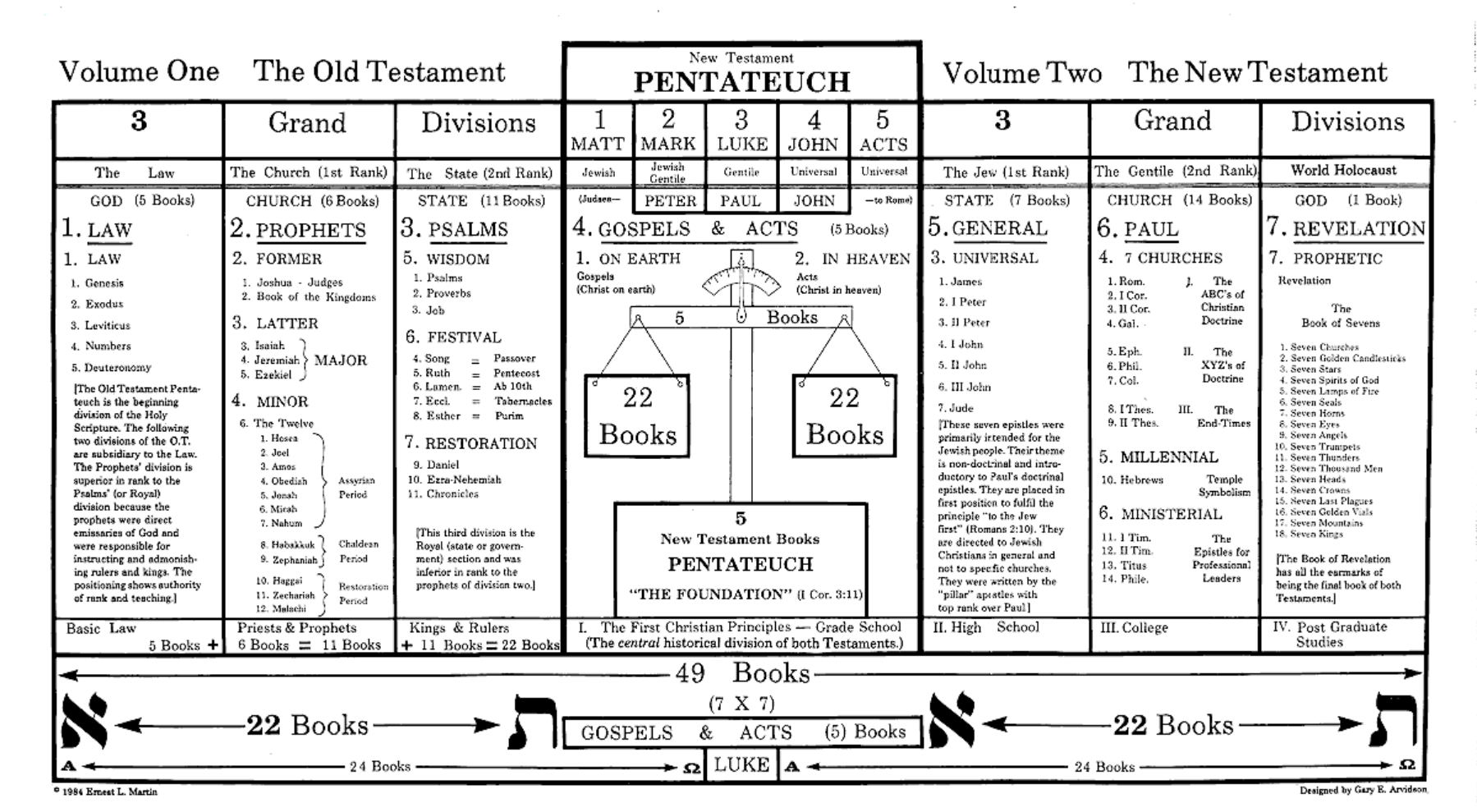
When we examine the New Testament writings completed prior to A.D. 70, we find a striking pattern: 22 books, mirroring the 22 books of the Old Testament.
This number was not arbitrary.
In Jewish thought, 22 symbolized completion. According to Jubilees 2:23, God created 22 foundational things during the six days of creation. These corresponded with the 22 generations from Adam to Jacob, the 22 letters of the Hebrew alphabet, and the 22 books of the Hebrew Scriptures.
Scripture itself reinforces this symbolic structure through the use of acrostic poetry- such as Psalm 119 and Proverbs 31, where each of the 22 Hebrew letters begins successive lines.
Thus, the number 22 represented completeness and finality—signaling that nothing should be added or removed.
Approximately 25 years later, around A.D. 90, the Apostle John completed his writings, adding the final five books of the New Testament. This brought the total to 27 books.
When combined with the 22 books of the Hebrew Scriptures, the total becomes 49—seven times seven.
Completion multiplied by completion.
This numerical structure is not incidental. It forms a powerful pattern that would have been unmistakable to those familiar with biblical symbolism. Such a structure would have been deeply compelling—not only to believers, but also to Jews considering the claims of Christianity.
This created a problem.
The leadership at Jamnia was not operating in a vacuum. By the late first century, Christianity was spreading rapidly, and its claims were being argued directly from the Hebrew Scriptures—often using the Greek Septuagint.
This context explains exactly why Jamnia in the first century AD was reconsidering certain books- to change the count. The issue was not new textual discoveries, but interpretive control.
Attempts to challenge or reconsider books such as Esther, Song of Solomon, and Ecclesiastes can be understood as part of a broader effort to counter the growing influence of Christianity and the impact of 49 books. When these efforts failed, more direct measures followed.
One of the most significant decisions at the Council of Jamnia was the introduction of the Birkat ha-Minim– a formal curse against heretics—specifically pointing out Jewish Christians (Nazarenes). This curse was incorporated into the synagogue’s weekly prayer.
If a person recited it incorrectly, they were required to repeat it publicly. No Jewish Christian could faithfully participate in such a practice, effectively excluding them from the Jewish community.
Despite these measures, Christianity continued to grow.
Then Rabbinic leaders, including Rabbi Akiva, began warning against the reading of “outside books”—a clear reference to fight the popularity of the Christian New Testament.
At the same time, another strategy emerged: replacing the Greek Scriptures.
The Septuagint had long been used by Greek-speaking Jews, but it also contained numerous readings that Christians used to prove that Jesus fulfilled Messianic prophecy. In response, around A.D. 128, Aquila of Pontus, a disciple of Rabbi Akiva, produced a new Greek translation of the Hebrew Scriptures. This translation differed significantly from the Septuagint- especially in Messianic prophecies that pointed toward Jesus as the Christ.
- Isaiah 7:14 was rendered to remove implications of the virgin birth
- Messianic terminology was minimized or avoided
- Psalm 22:16 was altered away from “they pierced my hands and feet”
- Isaiah 53 and other key passages were rendered in ways that obscured connections to Christ
Numerous additional passages—such as Psalm 110, Genesis 3:15, Psalm 40:6, and Isaiah 61:1—were translated in ways that diverged from the Septuagint and weakened their use in Christian argumentation.
Early Christians recognized this immediately.
Around A.D. 180, Irenaeus wrote in Against Heresies (Book III, Chapter 21), condemning translators such as Aquila and Theodotion as:
“impudent and presumptuous… who now show a desire to make different translations,” at the very time when Christians were “refuting them out of the Scriptures and shutting them up to a belief in the advent of the Son of God.”
Jerome later echoed this sentiment, describing these translators as those who had “concealed many mysteries of salvation” through their renderings.
At the same time, the traditional Jewish enumeration of Scripture was changed from 22 to 24 books—not by changing content, but by dividing previously combined books. All new translations of Aquilla, Theodotion and others abandoned the 22 book counting for a new 24 book reckoning.
This change disrupted the earlier symbolic structure and removed the numerical alignment with the Christian canon.
The total number of books, when combined with the New Testament, no longer formed the striking pattern of 49. In order to match this new count, Rabbi also began counting 24 letters in the Hebrew alphabet.

The Hebrew consonant Shin was split into two letters- an obvious duplication. No acrostic poems reflect a 24 letter count.
Their attempt to conceal the numbering only underscores its significance.
To this day, many Catholic scholars deny the existence or significance of the Council of Jamnia, often to support the claim that they were the ones that compied the Bible.
However, the evidence does not support this.
- The Old Testament canon had already been established centuries before Christ.
- The New Testament writings were completed before the end of the 1st Century
The reaction of Jewish leadership proves it. There would be no reason to change the translation and change the count of books to counter a New Testament that didn’t exist. Through their exclusion of Christians, reinterpretation of scriptures, attempt remove and later split books of their own scripture and purposeful obscure re-translations, they confirm New Testament was completed and canonized before the 2nd century.
These post Christian manipulations did not conceal its significance—they highlighted it.
The 49-book structure of Scripture—seven times seven—reflects a level of design that goes beyond human arrangement. It proves not only divine inspiration in the writing of Scripture, but also in its organization.
Any attempt to add or remove from that structure disrupts the pattern and exposes the alteration.
The completion of the canon was not an accident of history. Nor was it an “organic” unguided process. The Holy Scriptures have been preserved, guided and designed by Holy men of God through the word of God. It was part of a design that began long before the Apostle John—and was brought to completion through him.
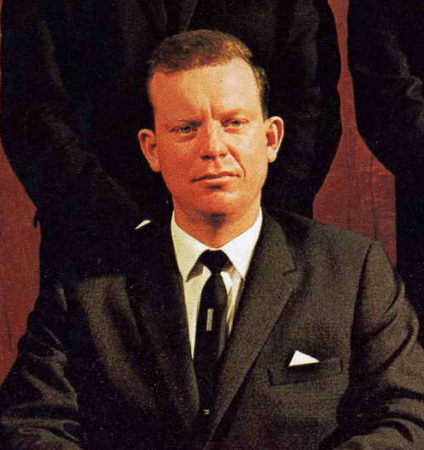
Much of this article is based upon the work of Dr. Ernst L. Martin and his book “Restoring the Original Bible“. For more information on the design and development of the Holy Bible, read his well researched book free online at:
www.askelm.com/restoring/index.asp
Dr. Ernest L. Martin was a prominent theologian, historian, and author who significantly impacted biblical archaeology and chronological studies. After serving in the U.S. Air Force as a meteorologist, Martin joined the Worldwide Church of God (WCG) in 1955. He became a central figure at Ambassador College, serving as a professor of history and theology. Most notably, he served as the Dean of Faculty at the Bricket Wood campus in England and later as the Chairman of the Department of Theology in Pasadena.
During his tenure, Martin bridged the gap between academia and faith, negotiating a landmark alliance with Hebrew University. This partnership allowed Ambassador students to participate in the prestigious archaeological excavations near Jerusalem’s Western Wall under Dr. Benjamin Mazar—an achievement featured in Time magazine in 1973.
Even though Martin was placed in highly prestigious and well-paid positions, out of the fear of God and search for doctrinal truth, Martin left the WCG in 1974 due to unaddressed problems. He founded the Foundation for Biblical Research and, in 1985, established the Associates for Scriptural Knowledge (ASK). Through ASK, he published influential works like The Star that Astonished the World and The Temples that Jerusalem Forgot, challenging traditional views on the birth of Christ and the location of the Jewish Temples. He remained a dedicated researcher and a servant of God until his passing in January 2002.
 The Herald of Truth