
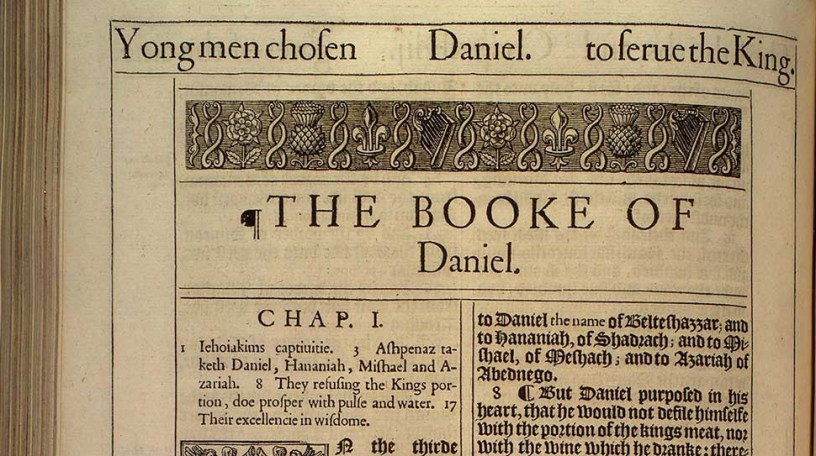
Few questions in all of biblical scholarship carry higher stakes than the dating of the Book of Daniel. This isn’t a debate over footnotes and manuscript variants. It is a direct confrontation with the question of whether God exists, whether He speaks, and whether He has the power to declare the end from the beginning.
Daniel presents a series of prophecies that are not vague or symbolic in the loose sense. They are structured, sequential, and historically anchored. The rise of Babylon, the Medo-Persian Empire, the Greek Empire under Alexander, the division of that empire, and the eventual rise of Rome—these are not generalities. They are detailed, ordered, and specific.
Daniel 2 lays out successive kingdoms. Daniel 7 parallels them with even greater clarity. Daniel 8 identifies Medo-Persia and Greece explicitly. Daniel 11 reads like a historical narrative of conflicts between the Seleucid and Ptolemaic kingdoms.
Then there is Daniel 9—the seventy weeks prophecy—which gives a timeline leading to the appearance of the Messiah. From it we can easily calculate the begining of the ministry of Jesus Christ when 3-1/2 years later, he was “cut off in the middle of the week” – crucified. This prophecy matches historical references exactly.
If Daniel was written in the 6th century BC, then we are dealing with genuine predictive prophecy. Not guesswork. Not symbolism after the fact. But foreknowledge. And that is precisely what many modern scholars cannot accept.
So instead of allowing the text to speak, the conclusion is set first: prophecy of that kind cannot exist. Therefore, Daniel must have been written later—after the events occurred. Everything else flows from that assumption. The dating debate exists because of the accuracy of Daniel’s prophecies.
The Linguistic Problem for Late Dating
If Daniel were written in the 2nd century BC, as many claim, then it should reflect the linguistic environment of that time. But it doesn’t. And this is where the whole theory of acedimia begins to break down.
1. The Problem of Old Persian
The Book of Daniel contains multiple Persian loanwords—specifically Old Persian, and more precisely, forms consistent with the Achaemenid period. That matters.
Old Persian was not spoken in the 2nd century BC. By that time, linguistic development had moved on. Languages evolve, shift, and disappear. Vocabulary changes. Pronunciation changes. Entire dialects fall out of use.
Now here’s the problem: How does a supposed 2nd-century author accurately use Old Persian administrative and cultural terminology that had been lost for centuries?
Take for example the term Ashpenaz used in Dan 1:3. For over 2000 years it was believed this word was the personal name of the officer of Babylon. The Septuigent even translated it this way. Only with modern discoveries—cuneiform tablets and comparative linguistics—did scholars discover that it actually means inkeeper in Old Persian.
That knowledge did not exist in the 2nd century BC when the Septuigent as written. So the question becomes unavoidable: How did a later writer access and correctly use linguistic material from a dead administrative language that the 70 writters of the Septuigent could not?
And if the answer is “he used earlier documents,” then the next question is: Why couldn’t one of those documents be the Book of Daniel itself?
At some point, the workaround becomes more complicated than the straightforward explanation.
2. The Aramaic Matches the Right Time Period
One of the things that makes Daniel unique is that half of the book was originally written in Aramaic-not just Hebrew. However, the Aramaic in Daniel is not generic.
It is not late Aramaic. It is not the kind of Aramaic you would expect from the Hellenistic period. It matches what scholars identify as Imperial Aramaic—the form used during the Babylonian and Persian administrations of the 6th and 7th centuries BC.
This is confirmed by comparisons with the Elephantine papyri—documents from Jewish communities in Egypt. The grammatical structures, vocabulary, and syntax line up. Not roughly. Not loosely. But exactly.
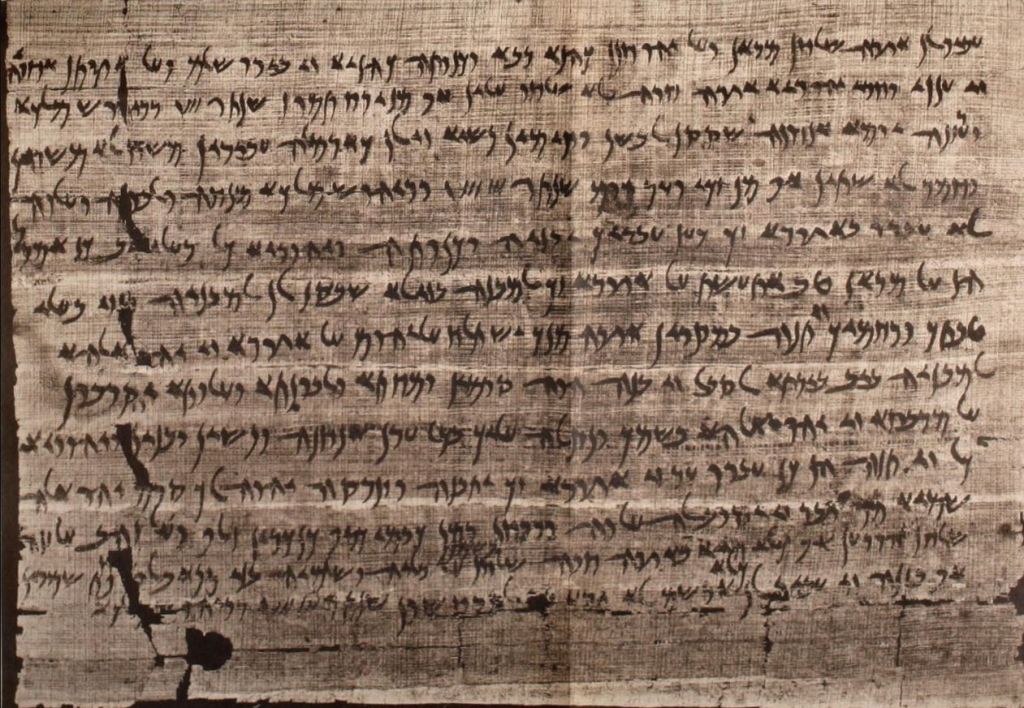
That is not what you would expect from someone writing centuries later. Language drift alone would prevent it. Try recreating the Cantebury Tales from 14th-century Middle English—with correct syntax, idiom, and vocabulary—and you begin to see the problem.
Now extend that challenge across languages, cultures, and administrative systems. It becomes ridiculous.
3. The Absence of Greek Influence
If Daniel were written in the 2nd century BC, it should be saturated with Greek influence. By that time, Greek had dominated the Near East for over a century. It was the language of administration, commerce, and culture. Greek loanwords were everywhere.
Yet Daniel contains almost none.
That is not what we would expect from a text composed in that period. Instead, what do we find? A text rooted in Hebrew and Aramaic, with Old Persian loanwords—but almost no Greek. That alone is striking.
4. The Exception That Proves the Rule: Greek Musical Terms
Critics have pointed to a few Greek terms in Daniel—specifically in Daniel 3, describing musical instruments. For a time, this was treated as decisive proof of late authorship. But archaeology has a way of humbling confident theories.
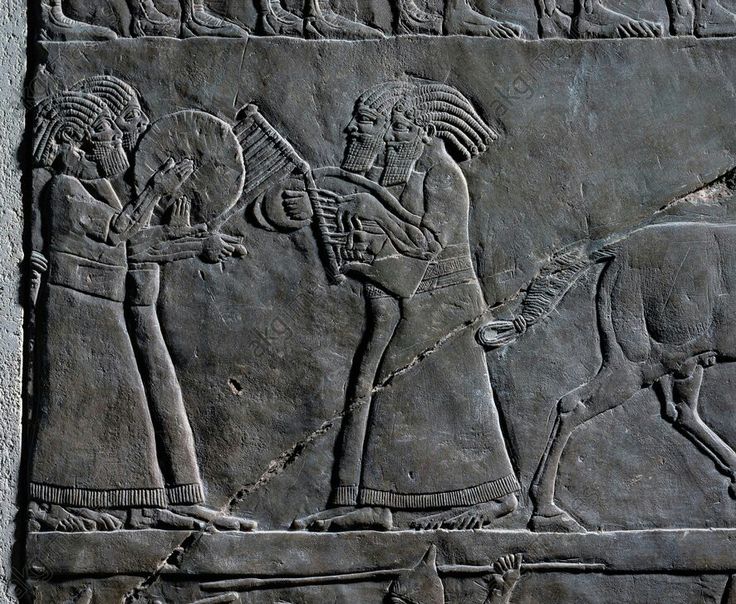
Excavations, including reliefs from Assyrian sites such as Nimrud, show that Greek musical instruments were already circulating in the Near East centuries earlier. Trade existed. Cultural exchange existed. Greek musical instruments were being sold throughout the known world.
So, the presence of Greek terms for musical instruments does not point to the 2nd century BC. It points to something much simpler: Imported objects often carry imported names.
And here’s the key observation: These are the only Greek loanwords in the book. If Daniel were written during the Hellenistic period, Greek influence would not be limited to a handful of musical instrument names. It would permeate the text. But it doesn’t. So what was once presented as a “smoking gun” actually reinforces the earlier dating.
5. Internal Consistency: One Author, One Style
The linguistic evidence within Daniel also points to unity. The Hebrew sections and the Aramaic sections are internally consistent. The vocabulary patterns, stylistic tendencies, and grammatical structures do not suggest multiple authors across different centuries. There is no sign of compilation over time. No fragments. No editorial seams. No gradual layering. Instead, what we see is a coherent work.
That fits far better with a single author writing within a consistent linguistic environment—rather than a later fabricator reconstructing multiple ancient styles with precision.
The Real Issue: Atheistic Presuppositions
At this point, the evidence begins to stack up:
- Old Persian usage that fits the earlier period
- Aramaic that aligns with Babylonian-Persian administration
- Minimal Greek influence despite Hellenistic dominance
- Historical details confirmed by later archaeology
- Internal linguistic unity
So why is the late date still so widely promoted? Because the issue is not evidence. It is presupposition. If you begin with the belief that God doesn’t exist then predictive prophecy cannot happen. Therefore Daniel cannot be early. It must be late. That is the controlling assumption. Everything else is secondary.
Arguments shift. Evidence is reinterpreted. Standards change. What was once “decisive proof” gets quietly abandoned when it no longer works. But the conclusion remains fixed.
This is what is often called antisupernaturalistic presupposition—a commitment, before examining the evidence, that God does not exist, he does not intervene, does not reveal the future, and does not act in history in a way that can be documented. Once that assumption is in place, the rest is inevitable.
A Biblical Perspective on Truth and Bias
Scripture does not leave us guessing about this dynamic. Paul addresses it directly in Epistle to the Romans:
“For the wrath of God is revealed from heaven against all ungodliness and unrighteousness of men, who by their unrighteousness suppress the truth.” (Romans 1:18, ESV)
That is a strong statement. Not that truth is merely misunderstood—but that it is suppressed.
Later, Paul continues:
“Claiming to be wise, they became fools.” (Romans 1:22, ESV)
And again:
“You who boast in the law dishonor God by breaking the law.” (Romans 2:23, ESV)
The issue is not lack of information. It is rejection of information because of what that information implies.
Daniel, if accepted on its own terms, points to a God who rules over kingdoms, raises up rulers, and declares the end from the beginning.
And that is not a comfortable conclusion for those committed to a closed, naturalistic system.
At the end of the day, we are left with two options:
- A 2nd-century writer somehow:
- Mastered a dead Persian language
- Reproduced earlier Aramaic forms with precision
- Avoided widespread Greek influence
- Got historical details right that were later confirmed
- Produced a unified literary work with no trace of compilation
- And successfully passed it off as ancient getting it included in the Septuigent only years later.
- Or… the book was written when it claims to have been written.
One of those explanations is straightforward.
The other requires a chain of convoluted explanations.
The Book of Daniel does not need to be rescued by complicated theories. It stands on its own.
And when we let it speak, it tells us something both simple and profound:
“The Most High rules the kingdom of men and gives it to whom he will.” (Daniel 4:17, ESV)
That is the message.
That is why it is contested.
And that is why it still matters.
 The Herald of Truth