
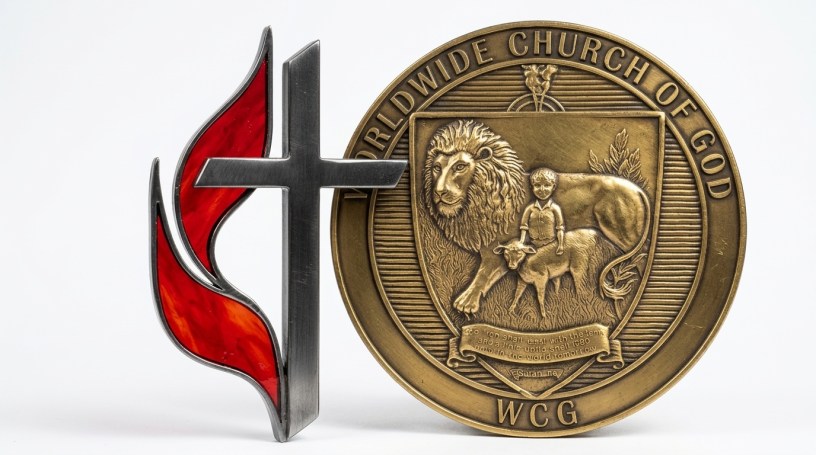
Between 2022 and 2023, the United Methodist Church (UMC) experienced one of the largest denominational divisions in modern American Protestant history. By the end of 2023, approximately 7,660 congregations, representing an estimated 1.5 million members, had left the denomination, many taking their congregational assets with them. In 2019, the traditionalist faction held the majority at the General Conference, yet they simultaneously established a means for their departure. Three years later, many traditionalist and conservative congregations began leaving, taking with them an estimated $10–15 billion in church assets.
What caused this division? When did the conflict begin? Could it have been prevented? And perhaps most importantly, why did the conservative faction, despite holding the majority of General Conference votes, find itself preparing for its own departure?
The conflict did not begin just a few years ago. Tensions had been building for decades. At its inception in 1972, the United Methodist Church maintained traditionally conservative positions on many moral and doctrinal issues. It opposed abortion, upheld high standards concerning sexual morality, emphasized the authority of Scripture, and proclaimed salvation through Jesus Christ. Its official teaching prohibited homosexuality and same-sex marriage.
However, over the years, a rift began developing between the bishops and headquarters leadership on one side and the congregations and their local leadership on the other. Under the UMC’s system of governance, the selection and advancement of the ministry was controlled by the existing ministry. Many prospective ministers received their theological training at seminaries before entering this system. Over time, this created the conditions for an ideological echo chamber, increasingly disconnected from the congregations these ministers were supposed to serve. Liberal theologians trained future ministers, some of whom eventually became theological instructors themselves. Gradually, critical biblical scholarship, progressive ideologies, and the justification of sexual practices traditionally condemned by Scripture gained influence in both the seminaries and the leadership of the church. Although many congregations continued to hold conservative Christian values, they had limited authority to ensure that their appointed leaders shared those convictions. The episcopal leadership had increasingly become a self-reinforcing class, disconnected from the congregations it served.
As the moral values of American society began to decline, many bishops, ministers and corporate leaders increasingly relaxed or refused to enforce traditional standards. Although the denomination’s published doctrines remained conservative, many minsters no longer personally accepted those teachings. Afraid of scrutiny from their congregations, they avoided openly preaching progressive doctrines—but neither did they defend traditional ones. Instead, many delivered “safe sermons” designed neither to offend conservative members nor reveal their own liberal positions. Controversial moral and doctrinal subjects were avoided altogether. Meanwhile, these leaders frequently appealed to Methodist heritage, denominational unity, loyalty, and the church’s historic mission, even while opposing efforts to enforce its traditional moral standards.
Over time, it became increasingly apparent that many leaders were not only failing to preach about abortion, homosexuality, marital infidelity, the authority and infallibility of Scripture, or the problems associated with feminism, but were also failing to enforce the denomination’s established standards. Instead, at its November 2018 meeting, the Council of Bishops addressed several contemporary social and political issues, including:
- Racism and white privilege in the United States.
- Immigration policy and Central American migrant caravans.
- HIV/AIDS awareness and funding.
- Pastoral outreach to LGBTQ communities.
- The denomination’s future approach to homosexuality and same-sex marriage.
At the same time, bishops and other clergy were becoming increasingly emboldened in expressing progressive positions. In October 2013, retired Bishop Melvin Talbert performed a same-sex marriage ceremony in Alabama, despite the denomination’s explicit prohibition and requests from other bishops that he refrain from doing so. In June 2016, the New York Annual Conference commissioned ordained four openly gay clergy candidates. The following month, the Western Jurisdiction elected Karen Oliveto, an openly lesbian minister married to another woman, as bishop.
By 2016, the disagreement had become so severe that the General Conference authorized a special commission to examine how the denomination could move forward. At the special General Conference in 2019, conservative Christians supported the Traditional Plan, intended to reaffirm and strengthen enforcement of the conservative moral standards the denomination had historically maintained. Progressives, by contrast, supported the One Church Plan, which would have granted clergy and regional church authorities greater “flexibility and discretion” concerning same-sex marriage and ordination. Although the Traditional Plan prevailed, conservative delegates faced a serious problem: having a doctrinal rule written on paper meant little when the leaders responsible for enforcing it refused to do so. The denomination possessed disciplinary procedures, but traditionalists could not reliably compel bishops and other authorities to enforce them. Consequently, many conservative congregations concluded that their only remaining option was to leave.
The Worldwide Church of God: An Almost Identical Pattern
This was not the first time a large church organization experienced a devastating division following the introduction of progressive theological ideas within its leadership. The Worldwide Church of God (WCG) experienced a remarkably similar cycle, only over a much shorter period.
Following the death of its founder, Herbert W. Armstrong, Joseph W. Tkach was selected as the new Pastor General of the organization. Unbeknownst to Armstrong and much of the general membership, Tkach, his son, and members of their inner circle had been highly influenced by theological ideas while at Azusa Pacific University.
Over the following decade, the leadership followed a pattern remarkably similar to that later seen in the UMC. They initially emphasized the church’s historic mission, denominational loyalty, and the importance of unity. Meanwhile, controversial social issues affecting members and their families—including homosexuality, abortion, and the distinctive doctrines upon which the organization had been built were increasingly neglected. Meanwhile mainstream liberal and protestant theology were slowly being introduced, while headquarters continued denying that fundamental doctrinal changes were taking place. Internal papers expressing positions interpreted as a “pro-choice” agenda were leaked and circulated among members. By 1993, progressive ministers, including Earl Jones of Atlanta, began openly preaching ideas that had previously remained largely concealed. At that point, headquarters faced a choice: denounce the progressive ministers or acknowledge that their teachings reflected the direction of the church. They chose the latter.
The Worldwide Church of God had previously reported attendance exceeding 150,000. By 1994, attendance had fallen to approximately 104,000. One year later, it had dropped to approximately 66,400—a loss of more than one-third in a single year. Today it’s successor organization Grace Communion Internatioal (CGI) has less than 30,0000.
For someone outside the United Methodist Church or Worldwide Church of God, these events may seem merely academic—interesting historical accounts with little relevance to their own congregation. But the more important questions are these: What were the warning signs? Could these developments have been identified earlier? And could the same thing happen to your church?
Recognizing the Warning Signs
In both cases, there were early warning signs that elements of church leadership no longer shared the traditional values of their membership and were concealing progressive or liberal theological positions from public scrutiny. If several of the following patterns are consistently present within your church’s leadership, it may indicate that libtard ideology is being advanced behind the scenes.
1. Safe sermons. Because leaders no longer identify with the traditional beliefs of the church but are unwilling to openly teach their progressive ideas, they resort to nonconfrontational, feel-good messages about Christian living. With so much of Scripture effectively excluded from discussion, the scope and quality of their preaching deteriorate. Bold, talented speakers are sidelined in favor of compliant yes-men. Difficult doctrinal questions are rarely addressed. Prophecy is ignored. Instead, members receive watered-down messages covering elementary subjects at little more than a grade-school level.
2. Avoidance of controversial moral issues. Because of their progressive ideology, the leadership’s preaching is strikingly silent on the moral dilemmas confronting members and their children, including homosexuality, transgenderism, feminism, abortion, and the biblical roles of men and women. Members are often confused about why these subjects are continually avoided when they are so relevant to their lives. Marriage sermons may become noticeably one-sided, reflecting an underlying feminist perspective. Husbands are harshly criticized for abusive behavior, while Paul’s instructions concerning wives submitting to their husbands are conveniently ignored.
3. An emphasis on staying out of politics. Because many progressive ideologies are fiercely debated in American politics, openly discussing political issues could quickly expose the leadership’s actual positions. Consequently, members are strongly discouraged from becoming involved in politics—or even discussing political controversies. The instruction to “stay out of politics” becomes a convenient means of preventing the congregation from examining the moral and theological implications of those controversies.
4. Failure to enforce moral standards. Because leaders secretly hold progressive views concerning sexual morality, established church standards are increasingly ignored or left unenforced. Divorces are no longer carefully examined. Divorced members are permitted to remarry without meaningful scrutiny. Fornication and other forms of sexual immorality among unmarried members are not addressed. Although the church’s published doctrines may remain unchanged, its actual practices begin contradicting its stated beliefs.
The Biblical Safeguard Against Corrupt Leadership
However, in both of these denominational divisions—and in any religious organization where leadership begins abandoning the values and doctrines traditionally held by its members—there is a biblical principle that would have prevented such disasters. And it is not based upon one isolated passage. The principle appears repeatedly throughout both the Old and New Testaments.
The first account is found in Deuteronomy 1:13:
“Choose for your tribes wise, understanding, and experienced men, and I will appoint them as your heads.”
— Deuteronomy 1:13, ESV
Even though Moses spoke with God face to face, he recognized that he did not possess the same personal knowledge of every potential leader that the people themselves possessed. He therefore instructed the people to choose qualified men from among themselves, whom he would then appoint to positions of authority.
Notice the distinction: the people selected their leaders; Moses confirmed their appointment.
We see this principle again in Acts 6:3, when the apostles instructed the congregation to select seven qualified men to oversee an important responsibility within the church.
“Therefore, brothers, pick out from among you seven men of good repute, full of the Spirit and of wisdom, whom we will appoint to this duty.”
— Acts 6:3, ESV
The apostles did not simply choose seven men from among their personal associates and impose them upon the congregation. Instead, they instructed the brethren to identify qualified men from among themselves. Verse 5 tells us that the entire gathering approved of the proposal and selected Stephen and six others. Then, in verse 6, these men were presented to the apostles, who prayed and laid their hands upon them.
Again, the same pattern emerges: the congregation selected the men, and the existing leadership formally appointed them.
We find another example in Acts 1, following the death of Judas Iscariot. Approximately 120 disciples were gathered when Peter explained the qualifications necessary to replace Judas as an apostle. Two qualified men were presented, Joseph Barsabbas and Matthias. The assembly prayed, lots were cast, and Matthias was numbered among the eleven apostles. Although the final selection was determined by lot rather than by the apostles, the process involved the assembled congregation selecting canidates rather than Peter simply appointing a replacement by his own authority.
In Acts 14:23, we find Paul and Barnabas appointing elders in the congregations they had established.
“And when they had appointed elders for them in every church, with prayer and fasting they committed them to the Lord in whom they had believed.”
— Acts 14:23, ESV
The Greek word translated “appointed” is cheirotoneō, a term historically associated with choosing or voting by extending the hand. Although the word can also mean simply appointing someone, its use here is consistent with the congregational participation in selecting elders.
Then, in Acts 15:22, we find an especially revealing example concerning the selection of representatives to carry the decision of the Jerusalem council to the Gentile congregations.
“Then it seemed good to the apostles and the elders, with the whole church, to choose men from among them and send them to Antioch with Paul and Barnabas.”
— Acts 15:22, ESV
Notice who participated in this decision: the apostles, the elders, and the whole church.
The apostles did not simply issue orders from headquarters. The elders did not make the decision privately among themselves. The whole congregation participated in choosing the men who would represent them.
We find this principle again in II Corinthians 8:19, where Paul describes a brother selected by the churches to accompany him in administering a financial collection.
“And not only that, but he has been appointed by the churches to travel with us as we carry out this act of grace that is being ministered by us, for the glory of the Lord himself and to show our good will.”
— II Corinthians 8:19, ESV
Here, once agian, the churches themselves selected a representative to accompany Paul.
The biblical examples do not suggest that congregations should operate without leadership or that every member possesses equal authority to teach doctrine. On the contrary, Scripture clearly establishes qualifications for elders and responsibilities for those appointed to oversee the church. But neither does Scripture present an unaccountable religious hierarchy, perpetually selecting its own successors while the congregation has no meaningful voice in who governs it.
The biblical pattern demonstrates shared responsibility: the congregation participates in identifying qualified leaders, while existing spiritual authorities examine their qualifications and confirm their appointments. Neither group should be permitted to operate without accountability to the other, and both remain subject to the authority of Scripture. The Roman Catholic Church has thousands of years of examples of the result of unaccountable leadership.
There is an old saying, commonly attributed to Abraham Lincoln, that expresses an important truth about human nature:
“You can fool some of the people all of the time, and all of the people some of the time, but you cannot fool all of the people all of the time.”
A single individual can be deceived. Even a wise and experienced leader can be misled. A small committee can become an ideological echo chamber, and a self-perpetuating hierarchy can gradually lose touch with the people it was appointed to serve. But you can’t fool all of the people all of the time.
That is precisely why even Moses, who spoke with God face to face, instructed the people to choose qualified leaders from among themselves.
If Moses recognized the importance of involving the people in selecting their own leaders, what justification do modern church organizations have for excluding their congregations from that responsibility?
The lesson from these two denominational divisions should be unmistakable: When a church allows a small group of leaders to select their own successors without meaningful congregational participation or accountability, it creates the very conditions under which doctrinal corruption can flourish unchecked.
The responsibility for preserving the faith cannot be surrendered entirely to one man, a council of bishops, a seminary, or a denominational headquarters. It belongs to the whole church, under the authority of Jesus Christ and His Word.
Because one man can be deceived, and an entire leadership council can be led astray, but when the whole congregation is involved in selecting and holding its leaders accountable, deception becomes far more difficult to conceal.
The church belongs to Jesus Christ—not to its ministers, its bishops, or its headquarters. And its leaders must remain accountable to the brethren they have been called to serve.

