
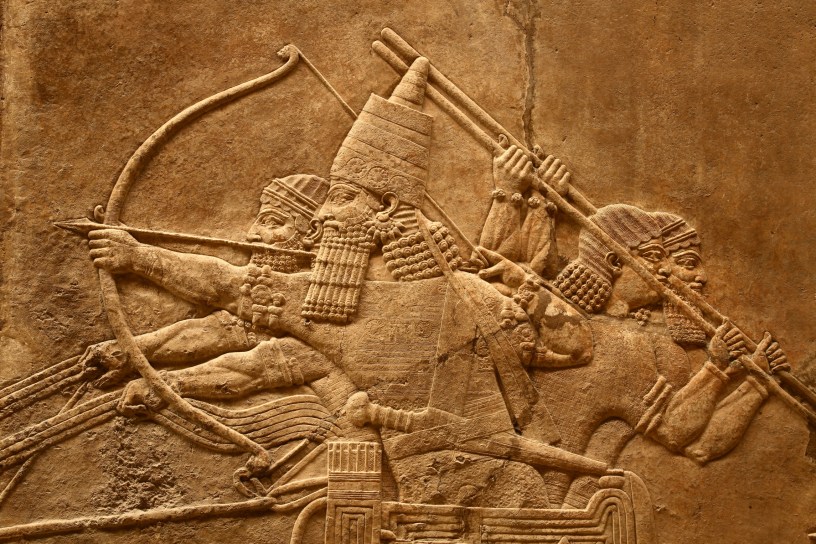
Part One: From the Assyrian Deportations to the Appearance of the Cimmerians and Scythians
The standard academic answer to the question of what happened to the ten northern tribes of Israel is, frankly, no answer at all. They were deported by the Assyrian Empire between 734 and 715 BC, and then — according to the historians who dominate our universities — they simply vanished. Absorbed. Assimilated. Gone. The earth swallowed them.
But nearly two million people do not simply vanish. And when you follow the actual evidence — the Assyrian cuneiform records, the work of credentialed Assyriologists, the reports of ancient historians, and the findings of modern archaeological surveys — a very different and far more remarkable story emerges. It is a story that academia has shown remarkably little interest in pursuing, and the reason for that disinterest, as we shall see, is not difficult to identify.
This is the first in a four-part series examining that evidence. We begin where the story begins: with the division of the nation of Israel, the rise of Assyria, and the documented deportations that set in motion one of the most consequential — and most suppressed — migrations in human history.
The Division of the Kingdom
To understand what happened to the ten tribes, we must first understand how they came to be separated from the rest of Israel in the first place.
After the reign of King Solomon, his son Rehoboam inherited the throne of a united kingdom already straining under the weight of heavy taxation (I Kings 12:4). When the elders of Israel petitioned the new king for relief, Rehoboam famously rejected their appeal and threatened to increase the burden further(v10). The result was immediate and irreversible. Around 920 BC, the ten northern tribes broke away from the house of David, forming the independent Kingdom of Israel in the north, while the tribes of Judah and Benjamin remained as the southern Kingdom of Judah.
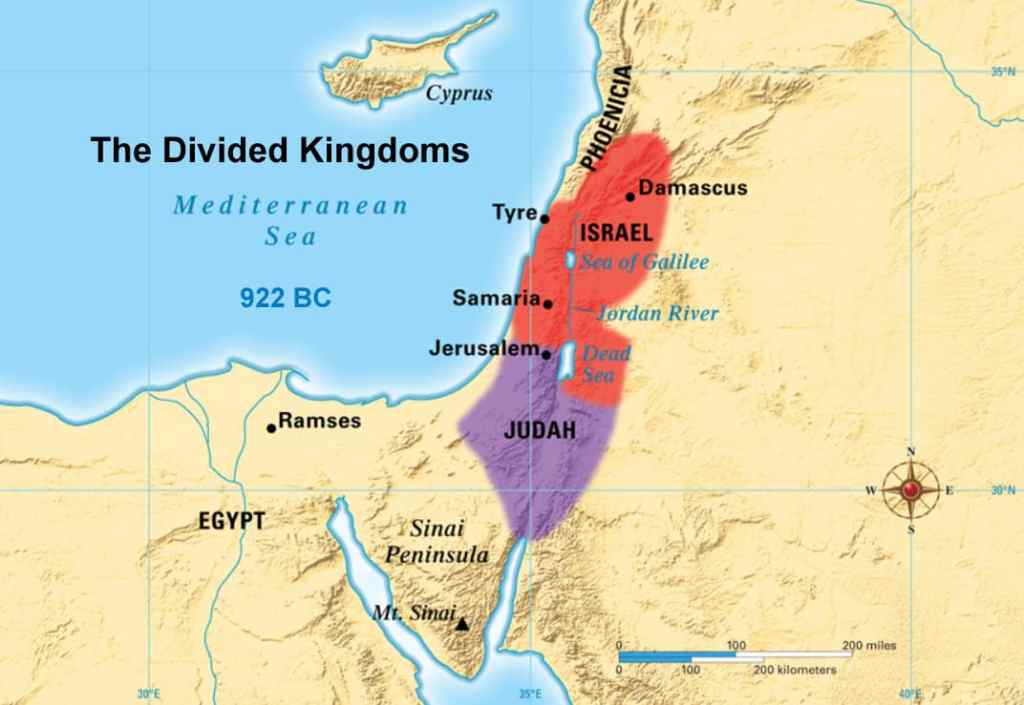
From that point forward, these were two separate nations. The northern kingdom retained the name Israel and established its capital eventually at Samaria. The southern kingdom, centered on Jerusalem, was known as Judah — and it is from Judah that the term “Jew” derives. This distinction matters enormously for what follows, because when we speak of the “Lost Tribes,” we are speaking specifically of the northern kingdom of Israel, not the Jewish people of Judah whose history is far better documented and traced.
The Rise of Assyria and the Beginning of the End
By the mid-eighth century BC, the northern kingdom of Israel was in serious political trouble. A rapid succession of six different kings — many of them assassins of their predecessors(2 Kings 15:25)— destabilized the nation in the decades following the death of Jeroboam II around 753 BC. Into this weakness stepped one of the ancient world’s most formidable military machines: the resurgent Assyrian Empire under Tiglath-Pileser III.
Israel had already become a tributary vassal to Assyria under King Menahem, who paid an enormous annual tribute of 1,000 talents of silver to buy peace (II Kings 15:19). But when a subsequent king, Pekah, entered into a military alliance with Damascus to challenge Assyrian supremacy, the consequences were catastrophic.
Tiglath-Pileser struck with devastating precision. Beginning in 734 BC, his armies swept through the northern territories of Israel — the coastal regions, Gilead in Transjordan, and then Galilee. The deportations began immediately. Tiglath-Pileser’s own inscriptions record what happened:
“I carried off to Assyria the land of Bêt-Humria (Beth Omri or Israel)… all of its people. They killed Pekah, their king, and I installed Hoshea as king over them. I received from them 10 talents of gold, and talents of silver.”
This inscription is significant for two reasons. First, it confirms the Biblical account in 2 Kings 15:30 with striking precision — including the detail that Hoshea killed Pekah and became king. Second, notice how the Assyrians referred to Israel: not as “Israel,” but as Bêt-Humria — the House of Omri, after the powerful king who founded Samaria in the ninth century. This Assyrian designation for the Israelites will become critically important later in our investigation.
The Scale of the Deportations
The deportations under Tiglath-Pileser were only the beginning. Three successive Assyrian kings were involved in the systematic removal of the Israelite population.
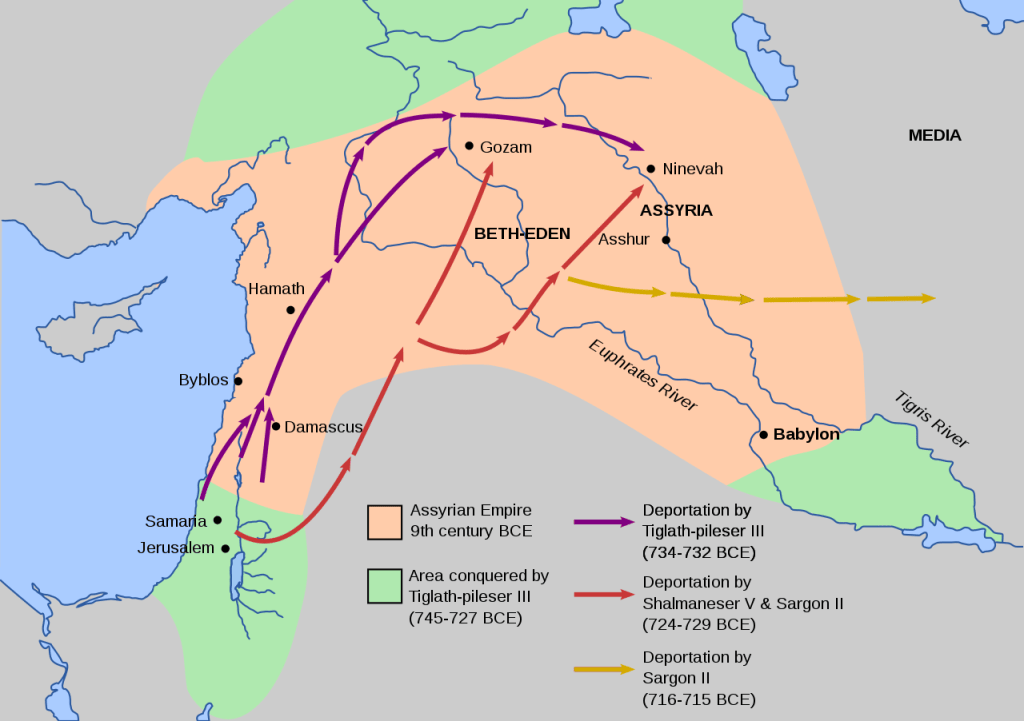
Shalmaneser V continued the campaign, besieging Samaria itself. Then Sargon II, who came to power in 722 BC, completed the conquest and recorded his achievement in what is known as the Great Summary Inscription:
“I besieged and [re]conquered Samaria. I took as booty 27,290 people who lived there. I gathered 50 chariots from them… I imposed upon them the same tribute as the previous king.”
That 27,290 figure represents a single deportation from a single city — the third such deportation of Samaria alone. The deportations continued until at least 715 BC under Sargon, with additional waves removing populations from throughout the northern territories.
How many people in total? Israeli archaeologist Zvi Gal conducted a survey of Lower Galilee — one of the less densely populated agricultural regions of ancient Israel — and determined it held approximately 17,600 inhabitants before the Assyrian campaigns. After the deportations, the population collapsed to virtually nothing. Assyrian records document 13,520 deportees from this region alone, which was just one of sixteen districts. Extrapolating conservatively across all sixteen districts and multiple waves of deportation, the total number of Israelites removed from their homeland runs to somewhere between three-quarters of a million or as high as 2 million people.
These deportations are not biblical mythology. They are confirmed in meticulous detail by Assyrian administrative records, royal inscriptions, and military correspondence — documents that spent millennia buried in the ruins of Nineveh and Calah before nineteenth-century archaeologists brought them to light.
Where They Were Sent
Scripture is specific about the destinations. 2 Kings 17:6 states plainly: “The king of Assyria took Samaria, and carried Israel away into Assyria, and placed them in Halah and in Habor by the river of Gozan, and in the cities of the Medes.”
This is confirmed independently by K. Lawson Younger, Assyriologist and Professor of Ancient Near Eastern History at Trinity International University, who wrote after examining the cuneiform record: “Assyrian records confirm that the Israelites were taken to the same locations that the Bible identifies — Halah and Gozan, and the cities of the Medes.”
Halah corresponds to the Assyrian province of Ḥalaḥḥa. Gozan is the city known to Assyrians as Guzāna, identified with modern Tell Ḥalāf in eastern Syria. And the cities of the Medes — this is the critical destination — places the Israelites on the eastern frontier of the Assyrian Empire, in the Zagros mountain region bordering what is today northwestern Iran.
Younger is candid that no cuneiform text has yet been found explicitly naming Israelites in the Median cities. But he notes that Sargon’s 716 BC campaign into Median territory almost certainly occasioned deportations there, and the bidirectional nature of Assyrian population transfers — Medians were simultaneously deported westward — makes Israelite settlement in the Median cities virtually certain. The absence of confirming documents is a function of how little the Zagros region has been archaeologically excavated, not evidence that the settlement didn’t occur.
A People Appears From Nowhere
Now we arrive at what may be the most remarkable convergence of evidence in this entire investigation.
At precisely the time the Israelites were being settled in the Zagros/Median frontier region — between approximately 722 and 714 BC — a new people appears in the Assyrian intelligence correspondence. They are called, in the cuneiform texts, Gamir or Gimirri. The Greeks would later call them the Cimmerians. They appear in the letters of Sargon II’s military commanders reporting on conditions along the Urartu frontier — exactly where the Israelite deportees had been settled.
They have no prior history. No archaeological trail. No homeland that anyone has been able to locate.
Renate Rolle, a specialist in Scythian and Cimmerian archaeology at the University of Göttingen, acknowledged this uncomfortable fact directly: “It is odd that, with any degree of certainty, no one has yet succeeded in demonstrating the presence of the Cimmerians from an archaeological point of view, neither in the southern parts of Russia, nor elsewhere.”
Danish scholar Anne Katrine Gade Kristensen, in her 1988 monograph published by the Royal Danish Academy of Sciences — Who Were the Cimmerians, and Where Did They Come From? — spent an entire book analyzing the primary Assyrian sources and arrived at a conclusion that mainstream academia has largely refused to engage: the Cimmerians were the deported Israelites.
Her geographic and chronological case is formidable. The Assyrian letters place the Cimmerians in the Zagros region — south of the Caucasus, in the area of the Mannaeans and Medes — at precisely the time and location where the Israelite deportees were settled. They behave not like invading barbarian hordes but like Assyrian military colonists, operating under Assyrian command during Sargon’s Eighth Campaign of 714 BC. And the philological connection is direct: the Assyrian name for Israel was Bit-Humri — the House of Omri. The Hebrew pronunciation of Omri, rendered through its guttural ayin, produced something closer to Ghomri. The Babylonian rendering of that sound produced Gimiri — the Cimmerians.
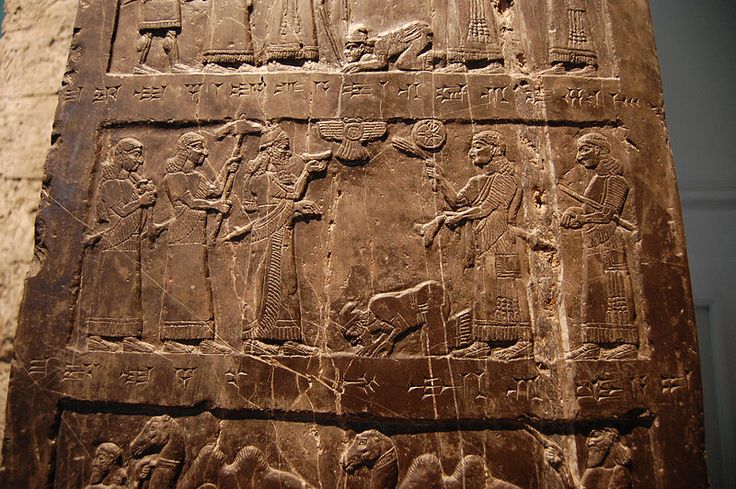
The Assyrians had two ways of rendering the name of Omri’s people: Humri in their own administrative texts, and Gimiri in the Babylonian dialect. Same people. Two transcriptions of the same name.
The Simultaneous Appearance of the Scythians
The Cimmerians were not alone. At the same historical moment — the late eighth century BC — another people appears in the historical record with equal abruptness: the Scythians, known to the Assyrians as the Ishkuza. Like the Cimmerians, they materialize in the region between the Black Sea and the Caspian Sea with no convincing prior archaeological presence.
The online historial magazine AncientPages.com noted what scholars have long acknowledged but rarely emphasized: “They suddenly appeared at the same time and near the same area of the Israelites’ disappearance.” The Assyrian sources place the Scythians’ first appearance during the reign of Sargon II — 722 to 705 BC — a date that, as the same source notes, “closely corresponds with that of the disappearance of the captives from Israel’s northern kingdom.”
The Hebrew word for the Scythians was Ashkenaz — a name that would later become the designation for one of the two great branches of European Jewry.
Consider what the evidence presents: nearly two million Israelites disappear from their homeland between 734 and 715 BC. They are documented as being placed in the Zagros/Median frontier region. At exactly the same time, two peoples — the Cimmerians and the Scythians — appear in that same region with no prior history, no archaeological homeland, and no convincing alternative origin. Both then migrate northwest over subsequent centuries, eventually disappearing from the historical record themselves — precisely as Northwestern European Celtic peoples are consolidating.
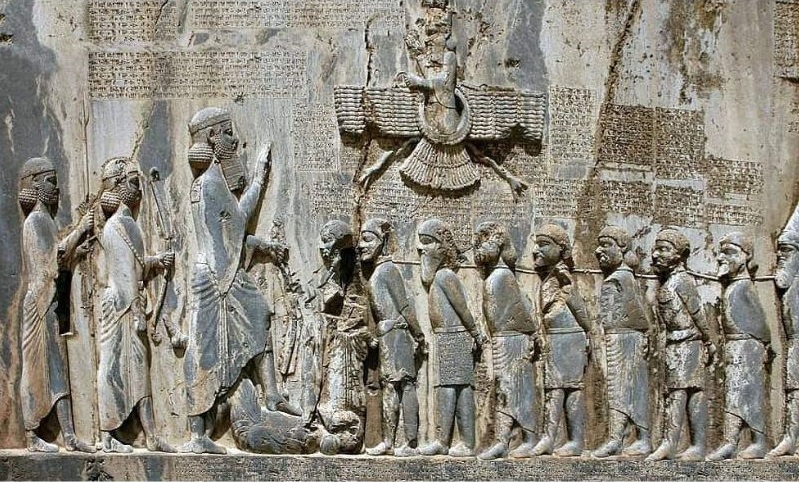
Sir Henry Rawlinson, one of the nineteenth century’s greatest decipherers of cuneiform, states the following: “We have reasonable grounds for regarding the Gimiri, or Cimmerians, who first appeared on the confines of Assyria and Medea in the seventh century BC, and the Sacae of the Behistun Rock, nearly two centuries later, as identical with ‘Beth Khumree of Samaria,’ or the Ten Tribes of the House of Israel.”
The Question That Demands an Answer
Academia’s default position — that nearly two million Israelites were simply absorbed into the Assyrian population — requires us to believe that one of the most prolific, culturally distinct, and well-documented ancient peoples left zero traceable descendants, zero cultural footprint, and zero linguistic residue anywhere on earth. Meanwhile, two peoples of unknown origin appear in exactly the same place at exactly the same time, carrying what appears to be the Assyrian name for Israel.
This is not a case where the evidence is thin. It is a case where the evidence is substantial, the convergence is remarkable, and the implications are ones that a secular academy has strong institutional reasons to avoid.

